

Author: Alex Dhaliwal
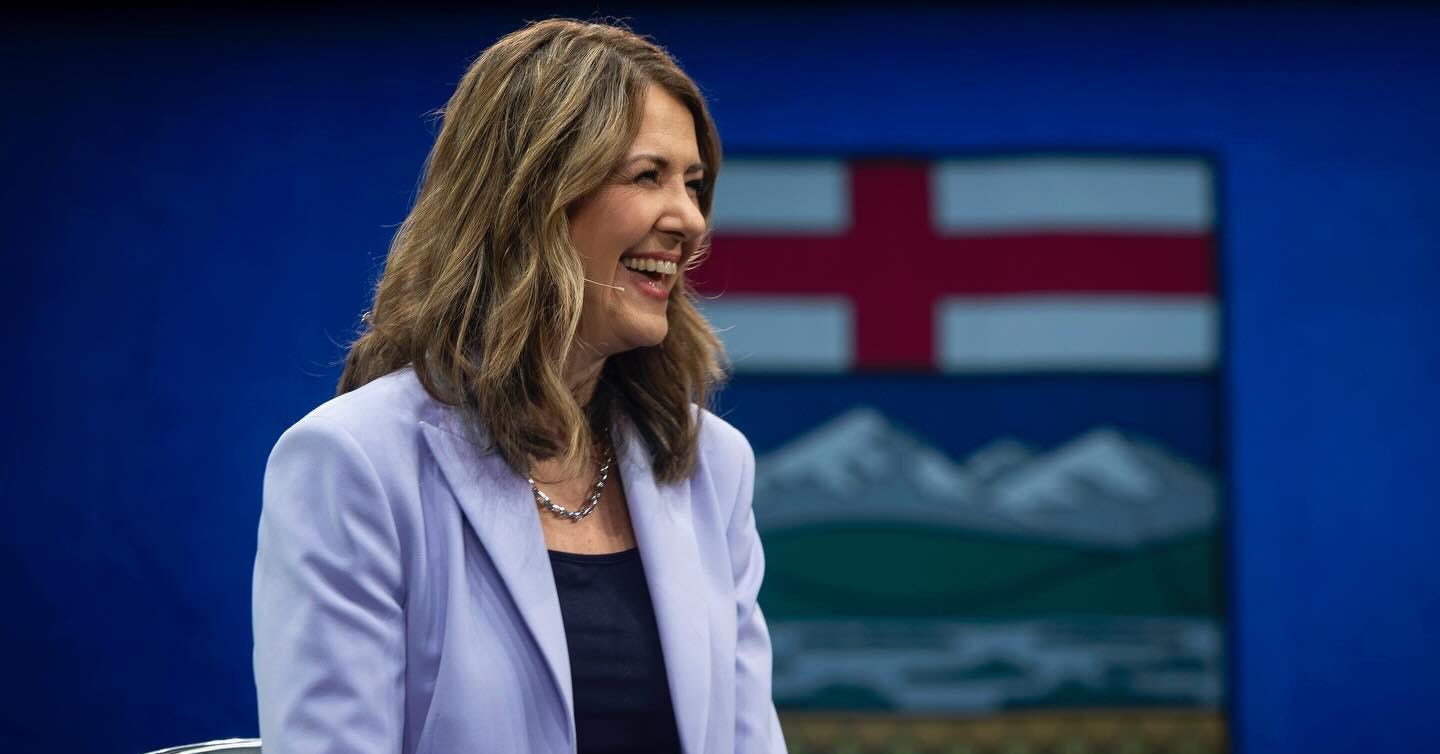
During a press conference on Monday, Premier Danielle Smith acknowledged voters cannot make an informed decision on independence without a cost estimate.
“I came up with $400 billion in transitional costs that we’d have to assume,” she said, ranging from Alberta’s portion of the federal debt, national defence, social programs, regulatory agencies and more.
Though she opposes independence, Smith says the cost for Alberta leaving Canada could be released this summer as part of her pledge to let Albertans vote on the issue.
“When can Albertans expect that potential document?” a reporter asked Monday during an unrelated press conference. “I hope it will be by August,” Smith replied.
On May 21, Premier Danielle Smith said a court ruling that struck down a citizen-led separation petition left her with “no other option” but to put the question to voters.
She vowed to respect the outcome and considers anything above 50 per cent a majority, despite her party’s official policy favouring greater autonomy within Confederation.
With the referendum question set for Oct. 19, both sides have less than 150 days to make their case for staying in Canada or pursuing separation.

At a Calgary debate hosted by the Aristotle Foundation, former premier Jason Kenney said Alberta separatists “can’t be taken seriously” and lack a coherent plan for the economic fallout of separation.
Keith Wilson, a constitutional lawyer and member of the Alberta Transition Council, said federalists offer no plan to address Alberta’s grievances, relying instead on “fear” and calls to maintain the status quo despite decades of frustration.

“Albertans who are concerned and support independence understand… that this is a rare moment in time of convergence of opportunity and convergence of threat,” the separatist said.
Wilson said that reality underscores why his movement must continue working to win more Albertans to its cause.


On May 22, the Alberta Transition Council said it aims to develop a professional roadmap for how an independent Alberta could function. “Not slogans,” he wrote on X, but a “blueprint.”
“We’re doing the serious, professional work behind one practical question: how an independent Alberta would actually function — lawfully, responsibly, and without disruption,” the Council’s website reads. “We think that question deserves real planning.”
So far, the governing United Conservatives have not detailed how an independent Alberta would function or its financial implications, despite calls from party members at their latest AGM.
This follows years of Access to Information requests from a former senior Treasury Board staffer, who notes the economic stakes are high and that Alberta’s have a right to know what it will cost them.
“Alberta Treasury Board and Finance nor Executive Council… have done a concrete analysis of what Alberta independence would mean for the economy,” writes Lennie Kaplan, a former senior manager with the Treasury Board and Minister of Finance.
“The most recent request to [the] Executive Council, filed on May 4 of this year, revealed that no work has been prepared.”
Last year, the Alberta Prosperity Project’s (APP) new draft fiscal plan projected Alberta’s economy could double within 20 years of separation.
Dennis Kalma, author of “The Value of Freedom” and member of the Council, estimated a surplus in the billions within the first year of independence from Canada.
The APP’s research, citing sources including Statistics Canada and the Government of Alberta, projects annual surpluses of $23.6 to $45.5 billion and claims Alberta would save $44 to $47 billion by no longer paying equalization.
The plan also promises first-year tax cuts of 33 to 55 per cent, deregulation, and expanded oil and gas production reaching 9.5 million barrels per day by 2045. It also claims the province would hypothetically receive $167 billion in 2026 from leaving the Canada Pension Plan.
However, experts say the fiscal plan lacks clarity and may overestimate revenues despite claims of conservative projections.
Kaplan says a fully costed plan from the province would “help clear any misconceptions” and “independently test the APP’s assumption” ahead of the Oct.19 vote.
He notes a government analysis would likely assess debt division, Canada Pension Plan participation, equalization, trade access, federal transfers, and currency options, adding that an independent Alberta would face major costs from duplicating federal institutions and services.
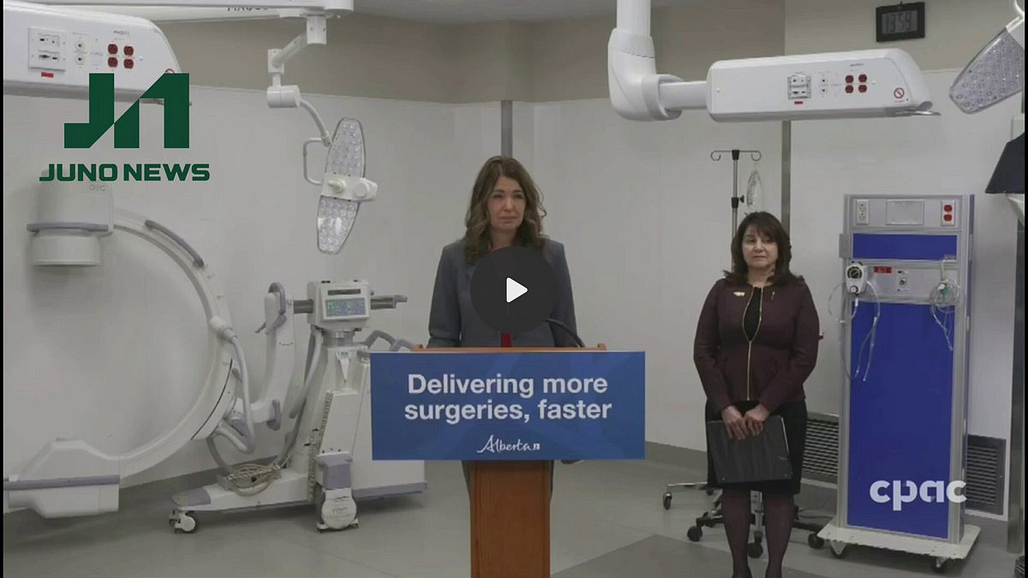
On Monday, the premier told reporters that an independent Alberta could inherit about $170 billion in debt, costing roughly $10 billion a year in interest, plus billions more for defence, social programs. That excludes building new institutions such as a pension plan, EI, border services, trade offices, a postal system, and regulatory agencies.
Premier Danielle Smith claims there are “probably hundreds of billions of dollars” in start-up costs to build a fully functional national government from scratch.
“I think it’s responsible for us to be very forthright about the cost associated with what is being proposed here so people can make an informed decision, and I hope that decision is to remain,” she said.
In a 2025 Calgary Herald column, Kaplan acknowledged that Albertans have been a consistently large net fiscal contributor to the Canadian federation.
According to Statistics Canada data, Albertans made $267.4 billion in net fiscal contributions to Ottawa between 2007 and 2023, with projections suggesting another $250 billion-plus could be transferred over the next 15 years.
However, he expressed concern over investor uncertainty, estimating Alberta separation could cost the province $130.2 billion in lost economic activity over the coming decade, underscoring the need for rigorous independent analysis before any referendum.
“It shouldn’t come down to a choice between the unreasonable costs of Alberta separation, political posturing toward separatists, sitting on the sidelines or maintaining the status quo,” Kaplan writes.
With the current equalization program set to expire in 2029 and renewal talks expected soon, Kaplan argues the provinces should push for a comprehensive, independent review of federal-provincial fiscal relations—including equalization and major transfer programs—to improve fairness, transparency, accountability, and economic growth.
Alberta has not received payments since the mid-1960s, forgoing at least $67 billion between 1957 and 2021.
Kaplan also pressed for further changes to the Fiscal Stabilization Program, a federal initiative designed to provide financial assistance to provinces facing significant year-over-year declines in their revenues due to extraordinary economic downturns.
The province received just $248 million in 2015-16 despite an $8.8 billion revenue loss, highlighting the limited federal support available under the program.
On the Canada Pension Plan, Alberta workers contributed $12.3 billion—15.5 per cent of CPP premiums collected nationwide—but received $7.7 billion, or 13 per cent of CPP benefits paid out due to its younger population.
Premier Smith said the issue “could be put to a citizen’s initiative,” but acknowledged the government still lacks clear federal answers on Alberta’s potential share.
In 2023, Premier Smith released an analysis claiming Alberta would be entitled to 53% of CPP assets—about $412 billion of the $777.5 billion fund—on withdrawal, a figure disputed in a 2024 federal Chief Actuary paper, though no alternative estimate was provided.
Cabinet has repeatedly rejected Alberta’s claim to 53 per cent of CPP assets. The Canada Pension Plan Act allows provinces to opt out if certain conditions are met, without federal approval.
The UCP says it would only replace CPP with an Alberta Pension Plan if it provides equal or better benefits at lower cost, and only proceed with a referendum under the Alberta Pension Protection Act.
Smith is a globalist. Her biggest argument to albertans was you won't have a cdn passport. Yes you will, and your kids 2 generations down will have a passport...if you want one. She said British brexiters are now mad they have to stand in the long line to get to their vacation homes in Spain...been there/done that they are all long lines when they want them to be. She said it will cost albertans hundreds of billions of $ to set up but fails to mention all the billions of $ not going to Ottawa (or their friends) anymore. Smith misses the whole point, if albertans vote to seperate or just vote to vote to separate they will force Ottawa to "bend over" and negotiate with the true engine of the Canadian economy. History tells us that is how quebec is a "give me province" or I'll leave partner to Ottawa.
Typical liberal fear mongering coming from a leader I once respected. She has fallen to the liberals. Smith and Carney are big buddies. Please tell me how things have changed since 1980 when Trudeau and his henchmen brought in the National Energy Program and invented Petro Canada. What BS and Smith should be ashamed of herself for falling for Carneys BS.