

Author: Alex Dhaliwal
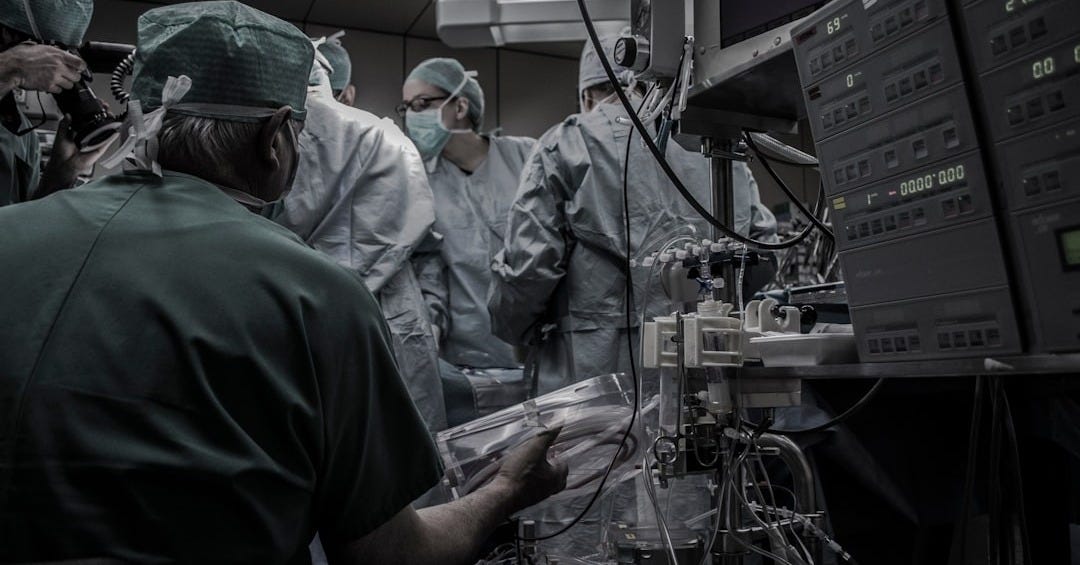
A new academic paper is reviving debate over “death by organ donation,” proposing that organs be retrieved from “assisted suicide” patients before they are declared dead.
Current law prohibits the practice under the dead donor rule, which requires patients to be declared dead before organs are removed and bars doctors from causing death through organ procurement.
But the paper’s authors argue the growing acceptance of voluntary euthanasia has fundamentally changed the ethical landscape, as first reported by the National Post.
Because “assisted suicide” patients knowingly consent to death and euthanasia laws already permit physicians to intentionally end life in limited circumstances, they say the dead donor rule deserves to be re-examined in that specific context.
They argue that allowing organ retrieval before death could improve organ quality, potentially save more lives and enable donors to maximize the impact of their final gift.

University of Toronto bioethicist Kerry Bowman told the National Post that the proposal risks undermining public confidence in both MAID and organ donation.
“I think a lot of the public would be fairly horrified by it,” Bowman said.
The paper, Contextualizing the Dead Donor Rule in an Era of Voluntary Euthanasia, stops short of calling for the dead donor rule to be abolished. Instead, the authors argue it should be reassessed as organ donation after “assisted suicide” becomes more common.

The dead donor rule exists to prevent people from being killed for their organs and to ensure patients are never treated merely as a means to benefit others. It has also been viewed as essential to maintaining public trust in transplant medicine.
But voluntary euthanasia, the authors argue, creates “a new ethical context.”
“The current legal reality of voluntary euthanasia provides a new context for interpreting the Don’t Kill Rule,” wrote two Canadian critical care physicians and a Harvard Medical School bioethicist.
The authors argue that because “assisted suicide” patients are not yet dead but have already consented to physician-administered death, requiring a formal declaration of death before organ retrieval may be ethically arbitrary.
Rather than focusing on the precise biological moment of death, they argue ethical safeguards should instead emphasize informed consent, protection against coercion and a transparent, publicly accountable process.
Under current Canadian Blood Services guidance, a patient’s decision to pursue “assisted suicide” must be made independently of any decision to donate organs.

Once it has been approved, however, organ donation may be discussed. Canada has become a global leader in organ donation following euthanasia.
Between 2019 and 2021, 136 Canadians donated organs after “assisted suicide,” including 41 cases in 2021—more than Belgium, the Netherlands and Spain combined.
Currently, organ donation after the contentious procedure follows the same protocol as circulatory death: physicians administer life-ending drugs, wait for the heart to stop, observe a mandatory five-minute “no-touch” period, and only then retrieve organs.
Lead author Dr. Carter Winberg, a Canadian critical care physician and Harvard bioethics master’s student, said the proposal would allow organs to be removed from sedated, unconscious “assisted suicide” patients before they are declared dead, with organ retrieval itself causing death.
The authors argue this would preserve organ quality, improve transplant outcomes and potentially increase heart donations.
“Since death would be a chosen and inevitable outcome in these cases, enabling retrieval under ideal conditions represents a Pareto improvement: no one would be made worse off, and multiple lives might be saved,” they wrote.
While no jurisdiction is considering the practice, the authors say it deserves “open, transparent dialogue” as legalized euthanasia expands.
Winberg argued voluntary euthanasia raises ethical questions that did not exist when the dead donor rule was established.
“So, yes, broadly, we are asking whether retrieval could form part of the process that causes death, rather than always occurring only after death has been declared in this specific new context,” he said.
The proposal has drawn sharp criticism from other bioethicists.
“Death by organ donation is asking surgeons to take a living person into the operating room and to come out with a dead person, which I think is murder,” University of Rochester bioethicist Lainie Friedman Ross told NPR.
Bowman also voiced concern, arguing some “assisted suicide” patients change their minds and could feel pressured to proceed if organ donation has already been arranged.
“I would argue that [it] really erodes the voluntary element of it,” he said.
Bowman also worries vulnerable patients may feel obligated to donate because they see themselves as a burden, while clinicians eager to maximize organ availability could unintentionally influence those decisions.
“You really do need some firewalls,” he said. “Clinicians... have got to put the patient in front of them first at all times.”
And just like that, I am no longer an organ donor.
Can I volunteer Carney for this program???