

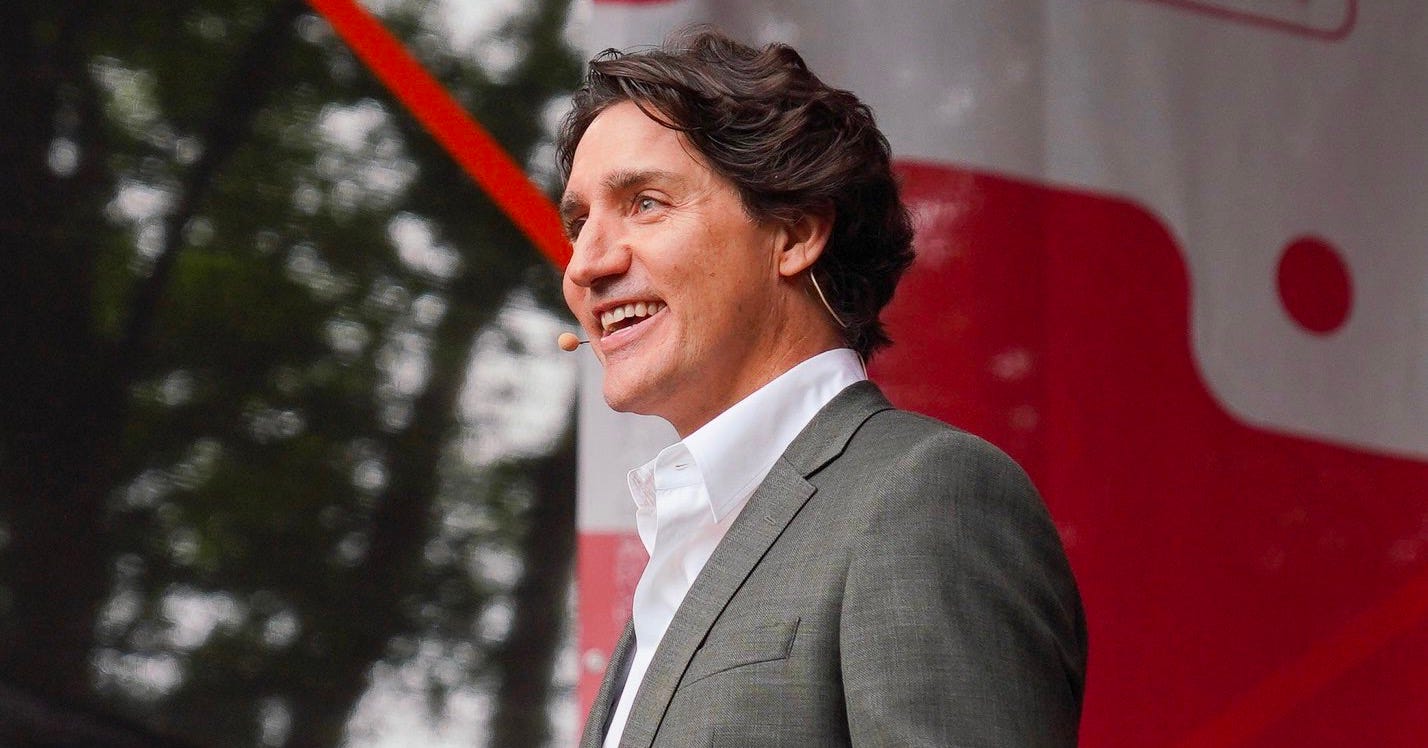
Former Prime Minister Justin Trudeau said the quiet part out loud Saturday, admitting his government overshot post-pandemic immigration targets.
However, he doubled down on defending immigration as essential, arguing integration depends on “shared values” rather than ancestry, during a forum chat in Pori, Finland.

Trudeau said immigration success depends on integrating newcomers, arguing that in a changing world, countries are defined by “shared values” rather than ancestry, speaking to a public crowd in a park.
He notes Canada faces the same “irregular” migration pressures as Europe, adding that integration requires giving newcomers a “stake in the success of the country,” calling it essential to making immigration work in a difficult time.


Former MP Kevin Vuong said that when similar concerns were raised in Ottawa, Trudeau “implied we were racist.”
“Integration isn’t exclusion. It’s the promise we make to everyone who comes here: this is what we stand for, and you belong in it,” the former MP wrote on X. “Calling that bigotry, as our then PM did, was how he lost the room — and the country.
“It was an excuse to avoid the hard work of nation-building as a personification of his administration: broad values based pronouncements instead of actual leadership and results.”
A Jul. 2025 Fraser Institute study found Canada’s immigration growth has nearly quadrupled since the Liberals took office, despite a pandemic-era dip during COVID-19 lockdowns.
From 2000–2015, permanent and temporary immigration averaged 617,800 annually, rising to about 1.4 million per year from 2016–2024.
In 2024 alone, 1.9M newcomers arrived, including 485,600 permanent residents, 518,200 international students, and 912,900 temporary foreign workers.
Between 2025 and 2027, Canada plans to admit 1.14 million new permanent residents and project a total increase of 2.2 million newcomers, including temporary and permanent residents.
Under Trudeau, the report says immigration has “skyrocketed” since 2021, driven largely by rising temporary residents.
Critics link the surge in newcomers to policy changes, including the 2014 International Mobility Program under Stephen Harper, which expanded access to temporary foreign workers for low-wage jobs, though most changes occurred under Justin Trudeau’s government.
A 2016 Trudeau-appointed advisory council recommended sharply increasing permanent immigration and international students eligible for residency, a proposal the study says the government “enthusiastically embraced.”
A surge in the number of illegal border crossers entering Canada from 2018 to October 2022, is attributed to a late 2017 tweet by Trudeau, welcoming migrants to Canada.
The Fraser Institute study also cites expanded immigration targets, looser temporary worker and student rules, and large-scale transitions from temporary to permanent residency as key drivers of the surge.
The Liberal government earlier pledged to reduce immigration amid public concerns over jobs, housing, healthcare, and social services, but the study says the small drop from 2023 to 2024 remained too high to meet its stated targets.
“We didn’t get the balance quite right,” Trudeau said in Oct. 2024, acknowledging immigration had surged and strained housing and labour supply.
Between 2023 and 2024, Canada shifted from demand-driven immigration to set targets and began aiming to reduce temporary residents to five per cent of the population.
Canada’s then Immigration Levels Plan targeted up to 505,000 permanent residents in 2023, 542,500 in 2024, and 550,000 in 2025.
Under Prime Minister Mark Carney, Budget 2025 freezes permanent residency at 380,000 annually for three years while still prioritizing temporary residents.
Immigration officials also announced 148,000 additional permanent residents will be added via targeted measures, including 115,000 refugees and 33,000 work-permit holders in 2026–2027.
Ottawa aims to cut Canada’s temporary resident share from 6.2 per cent to under 5 per cent by end-2027 by accelerating transitions to permanent residency.
This plan projects 1,125,000 new migrants via work and study permits during that period.
Are you tired of the Liberal progressive utopia yet? And Alberta separatist are the bad guys right?
The ignorance of the Canadian voter is the root cause of this problem. You cause your own country to fall. Trudeau took advantage and now enjoys a full pension at your expense. You see anything wrong with that? Canada's tombstone will read "Death by Apathy". Good riddance, We want out.
What a puke.