

Author: Quinn Patrick
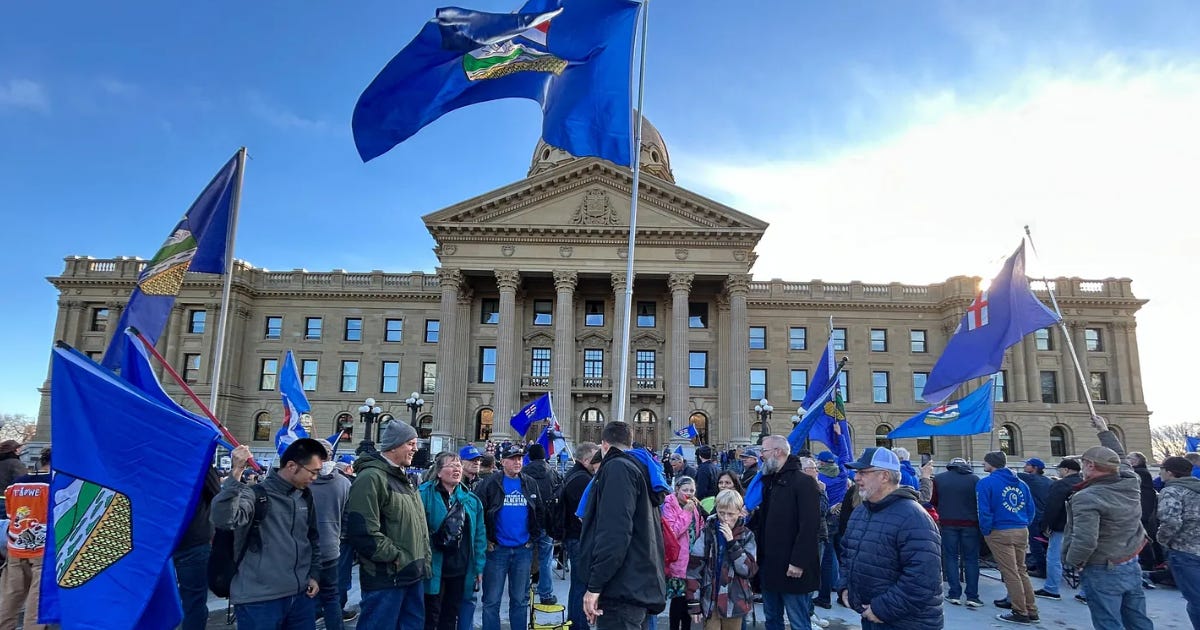
Support for Alberta’s separatist movement is now as strong as Quebec’s, a new Ipsos survey reveals, confirming the growing frustration with Ottawa among western Canadians.
Support for separatism in Alberta is now on par with Quebec, a new survey has found.
The survey found that 29 per cent of Albertans would “vote for their province to begin the process of separating from Canada and seeking a new agreement to define its future relationship with the country,” given the opportunity.
That cohort was only two percentage points shy of the 31 per cent of Quebecers who felt the same way, despite Quebec’s separatist sentiment having deeper roots dating back to before its initial referendum in 1980.

These figures include those who would definitely, probably, or lean toward voting yes.
However, support was drastically reduced when respondents were presented with five “real-world consequences” of separation, with only 15 per cent of Albertans and 16 per cent of Quebecers “maintaining their support after considering possible costs.”
“This means that for roughly half of separatist supporters in both provinces, independence is more a political message than a plan they are prepared to endure costs to achieve,” writes Ipsos.
For example, when asked if they would be willing “to pay serious economic and social costs for independence,” only 55 per cent of initial Alberta separatist supporters remained “committed,” while 25 per cent responded “conditional,” and 20 per cent “symbolic.”
Those who responded “symbolic” agreed that they were using the “independence threat primarily to express frustration rather than genuine intent to leave.”
Meanwhile, when the same question was asked of Quebecers, a similar breakdown was found with 49 per cent committed, 28 per cent conditional, and 23 per cent symbolic.
Ipsos suggested these responses determined that the “psychology of separatism operates similarly regardless of language, culture, or specific grievances.”
That said, separatists from both provinces cited different reasons for their desire to separate.
Albertans were more likely to vote in favour of separatism due to a sense that the province has “historically been mistreated within confederation.”
Quebecer separatists cited the belief that their “future would be served better outside of Canada.”
“However, in both cases, belief that the province would be better off in the future outside of Canada grows the more committed the respondent is to voting ‘yes,’ reads the survey. “Committed separatists in both provinces were more likely to refer to future prosperity as their reason for being a “yes” voter than conditional or symbolic separatists.”
There is potential for an Alberta referendum before the end of this year, provided those pushing for it are able to garner enough petition signatures to equate to 10 per cent of all residents who voted in the province’s previous general election.
Meanwhile, Parti Québécois Leader Paul St-Pierre Plamondon told party members at a PQ convention on Sunday that the referendum campaign for Quebec independence was already underway.
St-Pierre Plamondon suggested Prime Minister Mark Carney was the reason for it due to comments he made during a recent speech in Quebec City last week.

The PQ leader took issue with Carney describing the Plains of Abraham battle in 1759 as the start of a “partnership” between French and English people in Canada.
“Mr. Carney, Quebec does not exist because of Canada. In fact, Quebec has survived in its difference and specificity despite Canada,” he said, adding that the prime minister was part of a “long tradition of colonialism.”
“This tradition is one of falsifying facts and history and constantly feeding us lies through federal institutions,” he said. “We will break with British colonialism and create our own country.”