

Author: Alex Dhaliwal
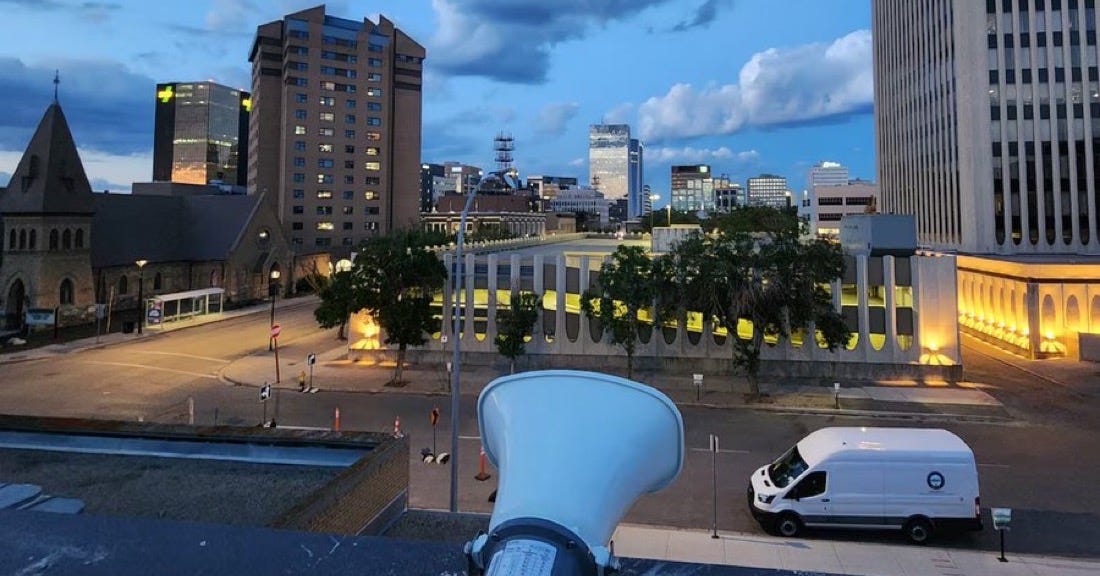
A downtown Regina mosque will no longer amplify the Islamic call to prayer, after it was briefly broadcast for three minutes last week with police approval.
“Based on that, we thought that it’s not wise to continue until we know exactly what we are doing,” Regina City Jamia Masjid director M. Anisur Rahaman told reporters Friday.

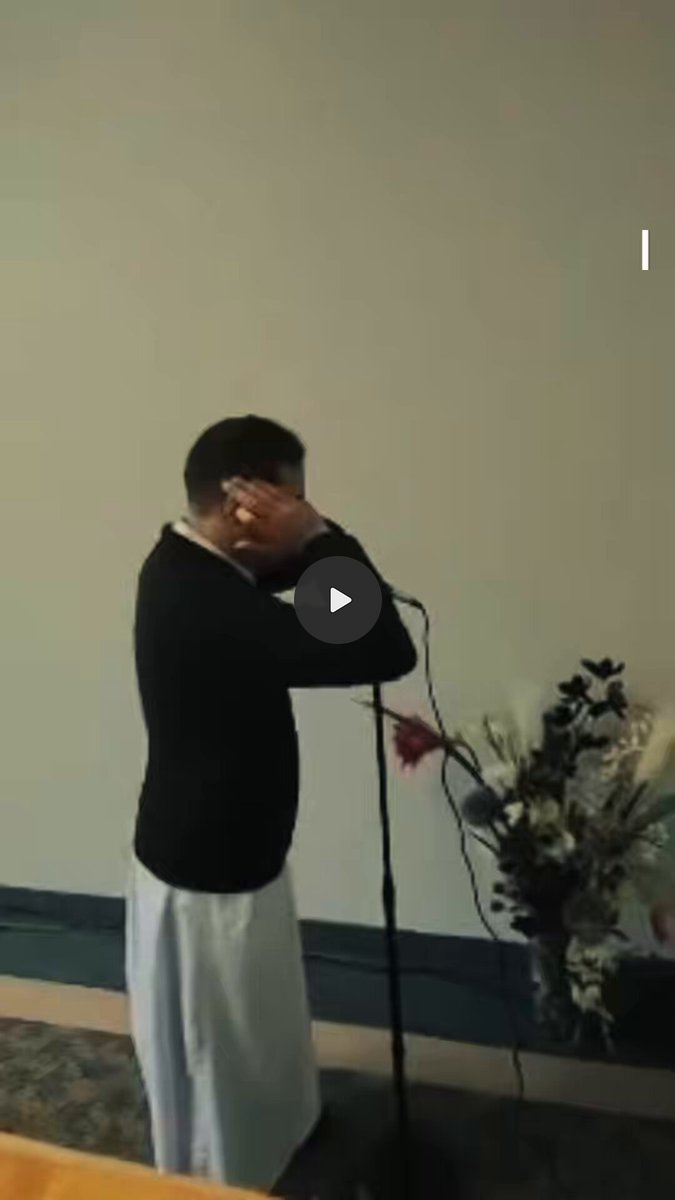
The director said complaints began last week after a viral social media post triggered online vitriol and threats, including calls to remove the speakers, leaving some in the Muslim community feeling unsafe.
Police previously warned they would prosecute threats against Muslims under updated anti-hate laws.
Bill C-9, the Combatting Hate Act, aims to strengthen hate crime laws, protect access to religious and cultural spaces, and criminalize the public display of hate or terrorist symbols. It received royal assent on Jun. 18.

On Friday, a small protest was held outside the mosque, with a police cruiser nearby.
“Why do they have to have a megaphone blasting it forcefully on the community?” Jackson Nordisvann, a Regina resident, said.
Mike Sinclair, a priest at St. Paul’s Anglican Cathedral, said he has no issue with the call to prayer and welcomes opportunities for interfaith connection. He also said he did not hear it when it was first amplified last week.
“I’m not bothered by the sounds of another faith community,” he told CTV News. “I hear bells from other churches. We sometimes ring bells. I’ve heard music in parks being played or sung. I don’t see why that would be any different than a call to prayer.”
Rev. Eric Gurash of the Archdiocese of Regina said the Catholic faith calls for loving one’s neighbours, and the archdiocese strongly opposes any prejudice, hatred, intimidation or threats against the Muslim community.
Under Section 319(1) of the Criminal Code, publicly inciting hatred against an identifiable group in a manner likely to breach the peace is punishable by up to two years in prison.
Bill C-9, however, does not create protest-free “bubble zones,” which are established by provinces and municipalities.
The Regina City Jamia Masjid, which opened two years ago near St. Paul’s and city hall has four rooftop speakers and flags of Canada and Saskatchewan at its entrance.
It began amplifying the prayer last week after police approval under noise bylaws, with weekly Friday noon announcements planned ahead of Jumu’ah under a permit valid until July 10, with a one-kilometre range.
The Regina Police Service (RPS) said it followed its standard process under the Noise Abatement Bylaw, issuing more than 100 amplification permits annually and assessing factors such as sound range, location, time of day and volume.
The Adhan or Muslim call to prayer is over 1,400 years old and lasts about three minutes, calling Muslims to worship.
Despite the growing antagonism, Rahaman told reporters he may resume using the speakers next month if there is public support, and plans to survey nearby businesses and invite broader public feedback.
The mosque director, after speaking with other Muslim leaders, also said they want to hear community feedback from people with “different cultural backgrounds.”
Rahaman earlier told media it would “help introduce” the mosque to both Muslim and non-Muslim residents from its downtown location.
“We believe in multicultural diversity,” he said.
The call to prayer isn't melodious, haunting, and solemn like it's described by followers, but a grating, annoying intrusion into one's space. They already can use a CTP app, so the reason for broadcasting is to assert their rights in a manner the alphabet community did, and similarly to exercise dominance. This appears to be the first step in eventually expanding to the full five calls to prayers. Otherwise, there's no need for it to be broadcast at all. Among other jurisdictions in North America that permit it, Minneapolis, Minnesota became the first to allow the Adhan over loudspeakers five times a day, year-round in 2023. As for justification by comparing the call to church bells, I've heard them maybe twice in my life, and they weren't strategically spaced around the clock to wake me up like they were during all the time I've spent in Muslim countries.