

Author: Alex Dhaliwal
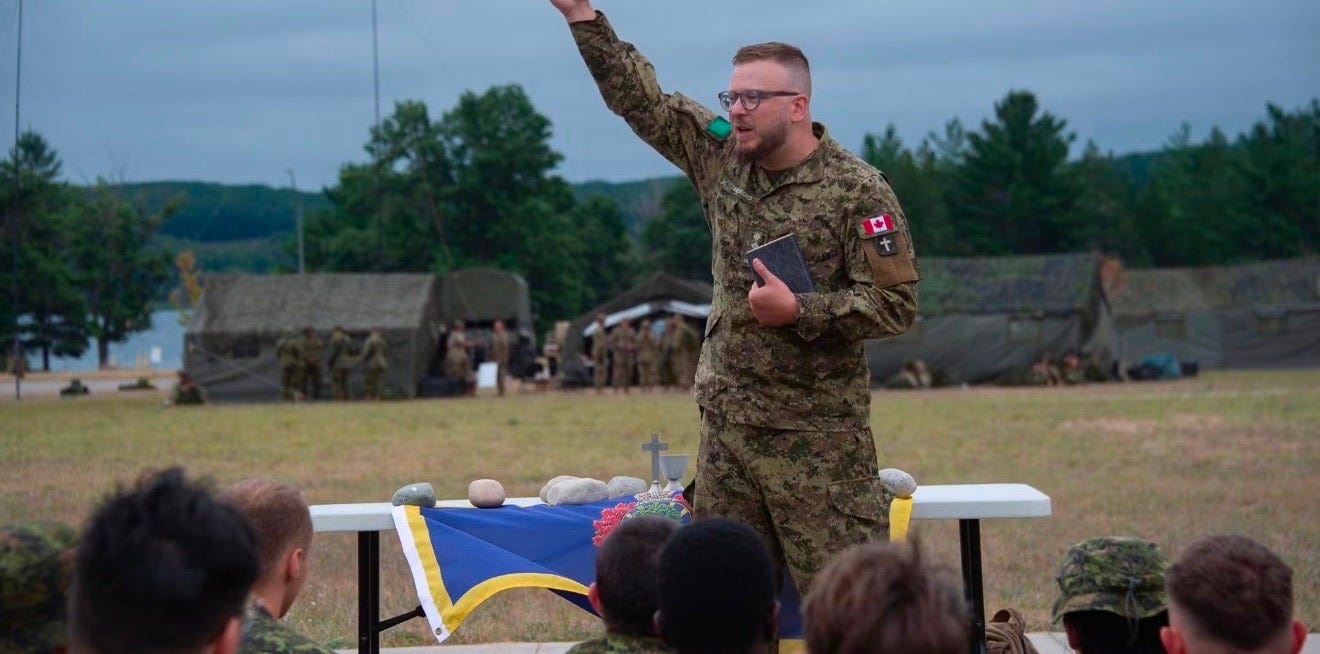
The Canadian Armed Forces has expanded its restrictions on public prayer, barring chaplains and anyone providing spiritual services at official military ceremonies from using faith-specific language—including references to God—in a move critics say amounts to an attack on religious freedom.
The new directive, issued July 29, extends rules that previously applied only to military chaplains to all CAF members, Department of National Defence employees, contractors and volunteers providing spiritual or religious services for the military.

Instead of offering prayers at official events, participants are now instructed to deliver a “spiritual reflection” focused on “lessons learned, beliefs, values, and experiences to inspire gratitude, remembrance, hope, and integrity,” as reported by The Epoch Times.
The policy applies to mandatory military events tied to official government business, including graduation parades, change-of-command ceremonies, honours and awards presentations, and Remembrance Day commemorations.
The directive builds on a 2023 policy that replaced traditional public prayers with “reflections” and prohibited references such as “God” and “Heavenly Father” during official ceremonies. The latest version expands those restrictions beyond chaplains while providing more detailed guidance on what is and is not permitted.
Faith-specific prayers remain allowed during private pastoral care, voluntary religious services, and military or state funerals where requested by the deceased or their family.
The directive also permits Indigenous spiritual practices during official events for “cultural, historical, and educational purposes,” provided participation in spiritual elements remains voluntary.
The CAF says the policy is intended to uphold state religious neutrality while respecting Charter rights for both religious believers and non-believers.

“The CAF must uphold and respect the Charter rights of our members and members of the public by maintaining religious and spiritual neutrality in the exercise of our public duties,” the directive states.
The changes have drawn sharp criticism from serving military chaplains.
One active CAF chaplain, speaking anonymously to The Epoch Times for fear of reprisal, described the directive as “their new attack.”
“If they can’t convince us, they will exhaust us into compliance,” the chaplain said.
He argued the expanded policy effectively imposes secularism on military personnel.
“Now all CAF members are required to adopt secularism as the official religion of the CAF publicly,” he said. “This is using the cover of religious freedom to obliterate religious freedom.”
A second anonymous chaplain called the directive an “inversion” of Charter protections.
“They invoke the Charter—which is supposed to protect religious freedom—in order to cancel religious freedom,” he said. “And then they have the audacity to claim that this policy enhances the chaplain’s ability to serve the needs of our CAF members, when it is a severe and obvious restriction.”

Conservatives also condemned the directive.
Shadow defence minister James Bezan said the new rules represent “continued interference in the traditions, values, and personal freedoms that have defined the Canadian Armed Forces.”
“The Government’s new directive restricting prayer and religious expression in official military ceremonies and commemorative events represents a disturbing departure from Canada’s longstanding commitment to religious expression,” Bezan said.

He argued the policy excludes military members of faith rather than promoting inclusion.
“Instead of being inclusive, this Liberal government has excluded military members of faith and sent a message that they are no longer welcome in the Canadian Armed Forces.”


Conservative MP Andrew Lawton called the directive “absolutely egregious,” writing that military chaplains are now barred from offering prayers at official ceremonies and may only deliver non-religious “spiritual reflections” that cannot mention God.
The directive does not specify penalties for violations. However, under existing CAF administrative and disciplinary rules, failing to comply with lawful military orders can result in administrative or disciplinary consequences.
The Department of National Defence previously said the changes are intended to ensure all participants “feel included and able to participate in reflection no matter their beliefs.”

I am not a participant of organized religion. However, any allusions to God made by a chaplain at a public, military-sanctioned event, especially on Remembrance Day, will not 'burn my ears.' Following tradition as a sign of respect for the lives lost by the majority of men, who certainly believed in God, should be adhered to.
Pastors should refuse to comply.