

Author: Cosmin Dzsurdzsa
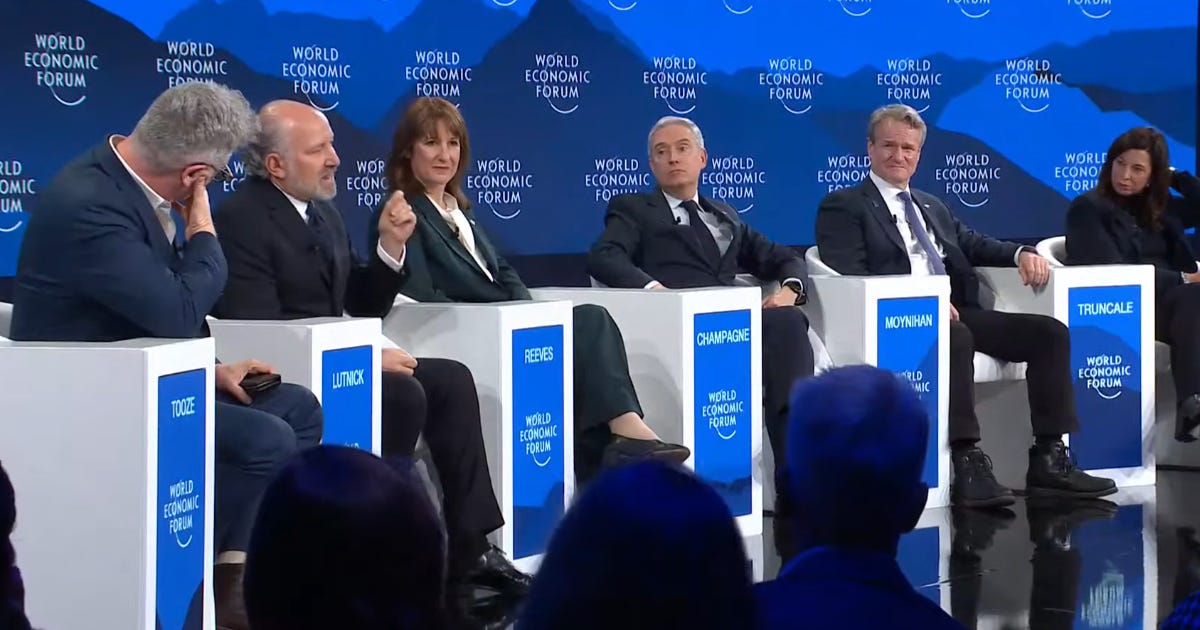
At a World Economic Forum panel in Davos this week, U.S. Secretary of Commerce Howard Lutnick slammed allied nations for cozying up to China, just as Canadian Prime Minister Mark Carney signed a deal to lessen restrictions on Chinese electric vehicles.
While on stage with Finance Minister François-Philippe Champagne, Lutnick argued that China makes Western allies “subservient” through net zero goals by controlling the supply chains for batteries and critical minerals.

The comments followed Prime Minister Carney’s announcement days earlier of a deal with the Chinese government to open the Canadian market to China-made EVs in exchange for a softening of canola tariffs.
The agreement opens the Canadian market to up to 49,000 Chinese-made EVs annually at a drastically reduced tariff of 6.1 per cent, down from the previous 100 per cent. In exchange, Beijing agreed to lower canola seed tariffs from 84 per cent to roughly 15 per cent.
Speaking to a global audience in Davos, Switzerland, Lutnick framed decades of globalisation as a failure of the West, which had exported jobs, hollowed out industries, and made allied countries dependent on China.

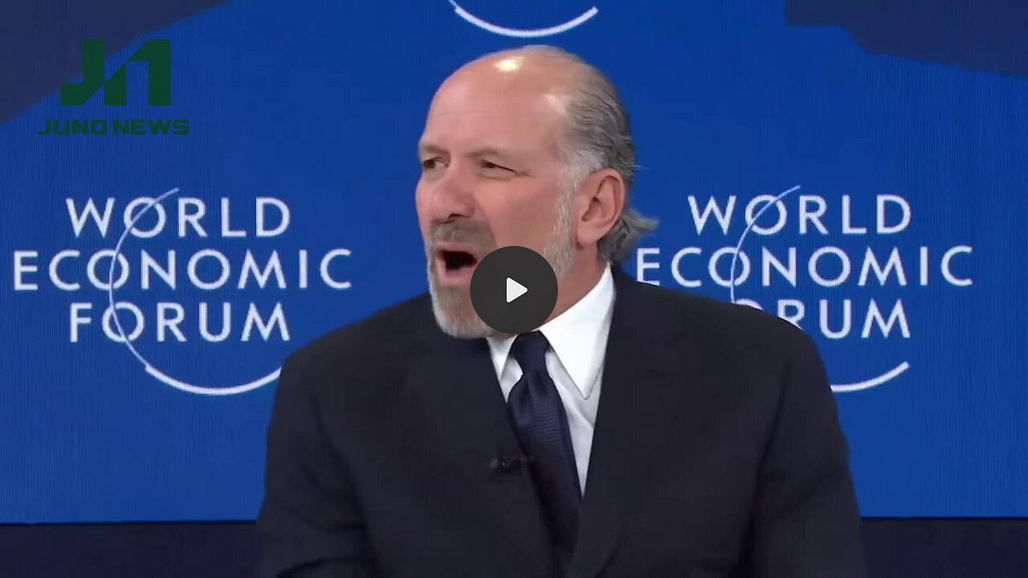
“Globalization has failed the West, and it has failed the United States of America,” said Lutnick, arguing that decades of offshoring and cheap-labour dependency weakened national sovereignty and abandoned domestic workers.
“Why would Europe agree to go net zero by 2030 when it doesn’t manufacture batteries?” Lutnick asked, directly highlighting how Europe’s climate policies make it dependent on China, which produces the vast majority of critical materials and electric vehicle components.
“Why would the United States — rich in oil and natural gas — try to convert entirely to electricity? China does not have oil and natural gas. For China, electrification makes perfect sense.”

In contrast, Carney delivered a keynote address at WEF later in the afternoon, telling the global audience that the longstanding U.S.-led, rules-based international order is effectively over, stating, “The old order is not coming back. We should not mourn it.”
Carney framed the current geopolitical landscape as a “rupture” rather than a transition, arguing that Canada must pivot to a “new world order” defined by strategic autonomy, a comment similar in tone to one he delivered while speaking in China.
Lutnick’s remarks served as a thinly veiled warning to Ottawa regarding the China deal. He maintained that following the climate orthodoxy and offshoring industrial capacity in the name of electrification strengthens China at the expense of the West.
Lutnick is correct.
Oh look, happy slaves. Oh great the guy who's boss is threatening to end Canada for good, to destroy your economy with 100% tariffs if you exercise your freedom... the Kings of Net Zero who claim they own the entire western hemisphere thinks CHINA is the problem. US ban on Chinese EV's is just more proof the carbon/climate hoax was manufactured by the US in order to prevent the developing world from prospering or using their own natural resources... with the ultimate goal of stealing them from sovereign nations through war and annexation.
The CIA backs Uyghur separatists in China, and in the Chinese province of Taiwan. From Kurdish separatists in Syria/Iraq to the SPLA in Sudan, where the US steals their oil, impoverishing the nation. U.S. officials under Trump have engaged with Alberta separatist proponents, including discussions of potential financial support like a $500 billion credit line (debt bribes). They are also behind the pipeline ban in Canada. Financing from CIA linked NGO's such as the Rockefeller foundation goes to native separatists, balkanizing BC through land grabs and blocking pipeline infrastructure with the blessing of compromised politicians. Just like the US created the conditions for the uprising in Iran by first destroying their economy through sanctions... then backing the uprising they created... only to blame the Iranian government. Or blowing up the Nord stream pipeline which destroyed Europe's industrial economy, as cucked EU politicians say absolutely nothing. They try block trade deals between Canada and China by threatening to destroy your economy with 100% tariffs. They use these tactics to destabilize and set you against yourself and your own nation. They create the conditions of poverty ripe for uprising. They back separatists and hijack otherwise legitimate movements to use against the nation through demoralization. Everyday people and the government must unite and stand up to these NGO's, against Trump and the US imperial agenda. We must hold our politicians accountable. We will not tolerate outside interference, this our land, this is our oil, and we will not impoverish our nation or our future to enrich a hand full of billionaire US oligarchs invested in big US oil corporations... nor will we be swallowed up in Americas 38 trillion dollars of debt as they promise us the moon.