


Author: Alex Dhaliwal
From dating apps and daycares to gaming platforms and AI, the Liberals’ sweeping surveillance bill could reach deep into nearly every aspect of Canadians’ digital lives — and government officials admit its scope is deliberately broad.
At a Senate hearing Monday, Public Safety Minister Gary Anandasangaree defended Bill C-22, saying it must keep pace with technological change.
“The term electronic service provider is deliberately broad,” he told senators.
The Lawful Access Act, 2026, would expand authorities’ access to subscriber information and require certain digital service providers to retain data or help investigations technically.
Privacy Commissioner Philippe Dufresne warned that the commissioner’s powers over subscriber information could extend to health care providers, lawyers, financial institutions and dating apps.
Justice Department counsel Anne-Marie Lebel also confirmed that, in theory, a subscriber information order could be directed at a daycare.

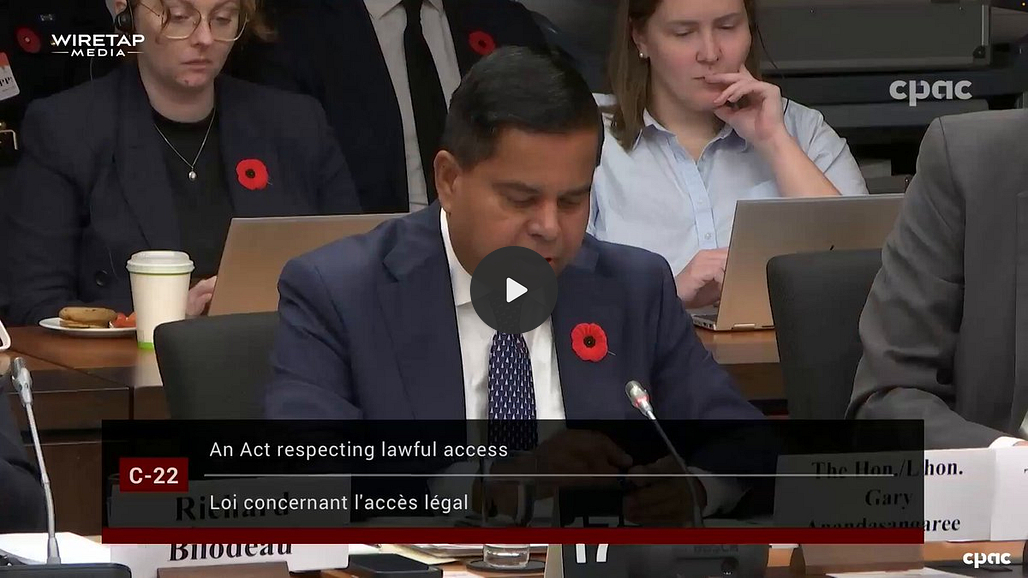
Anandasangaree said the government would initially focus on telecoms companies, satellite operators and social media platforms, while acknowledging that the legislation would eventually cover other services, too.
“The expansion to other platforms is not what is immediately envisioned, although, as technology develops, we want the ability to do that,” he said.
The minister also noted that future AI services could fall within the bill’s definition, though that would not necessarily mean they would be subject to all the proposed obligations.
The legislation defines electronic services very broadly to cover any business that creates, stores, processes or transmits electronic information (regardless of whether communications are their principal activity).
That definition could allow the government to impose certain technical obligations on further digital services via ministerial order (without the need for new legislation), subject to the relevant statutory restrictions and approval of the Intelligence Commissioner.
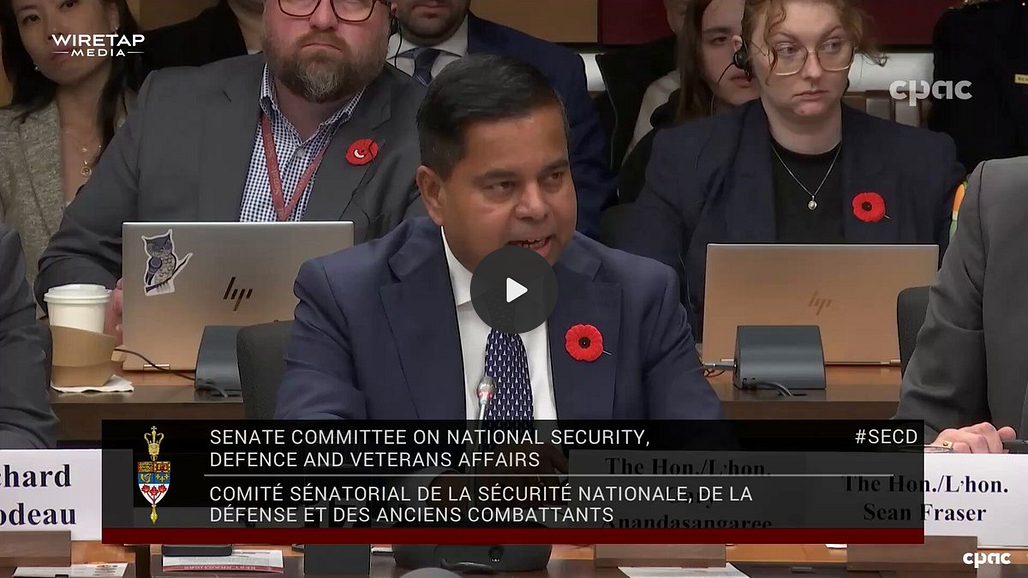
Shannon Hiegel, a senior Public Safety Canada official, admitted the definition was broader than those in other countries.
“Our definition at least would include things like gaming platforms where communication isn’t the primary purpose of that service,” she told senators.
Dufresne urged legislators to limit subscriber information orders to telecom providers and restrict the data obtainable, noting that other organizations’ records may be especially sensitive.
Although those orders would require a warrant, the bill would also let police and certain public officers ask a telecoms company to confirm whether it serves a particular account or identifier without first obtaining one, subject to the relevant statutory conditions.
The bill would also allow regulations requiring designated service providers to retain certain categories of metadata for up to six months (down from the proposed one year).
Metadata can relay who contacted whom and when, without revealing the contents of the communication.
Separately, the bill would permit confidential ministerial orders requiring e-service providers to develop or maintain specific technical capabilities, subject to the Intelligence Commissioner’s approval.


Constitutional lawyer Daniel Santoro (submission funded by the Justice Centre for Constitutional Freedoms) has warned the legislation could have a deleterious effect on Canadians’ digital security and constitutional rights.
“This bill renders true digital security illegal. It gives government the power to outlaw services people use for their own privacy and security,” Santoro said.
Although the bill includes protections against compelled decryption and against requiring systemic vulnerabilities, critics argue other technical obligations could still negatively affect digital security.
Dufresne admitted the legislation improved but recommended further safeguards, including independent assessments of potential security flaws.
Anandasangaree supported the bill’s oversight provisions for subscriber information production orders, which would require a court order.
“For issues such as the ministerial order, the oversight is with the intelligence commissioner,” he said.
The Government maintains that Bill C-22 would not authorize mass surveillance or require companies to build backdoors into their encryption.
At a May 5 Commons public safety and national security committee hearing, Anandasangaree said existing laws could not address modern criminal threats.
“Our laws have simply not kept pace with our digitally driven world,” he told MPs.
He argued at the November 2 hearing that the bill was designed to assist in criminal investigations rather than to enable “a fishing expedition”.
On October 22, the Senate passed Bill C-22 at second reading and referred it to the Standing Senate Committee on National Security, Defence and Veterans Affairs. It remains under committee review and is not law.