

By: Quinn Patrick
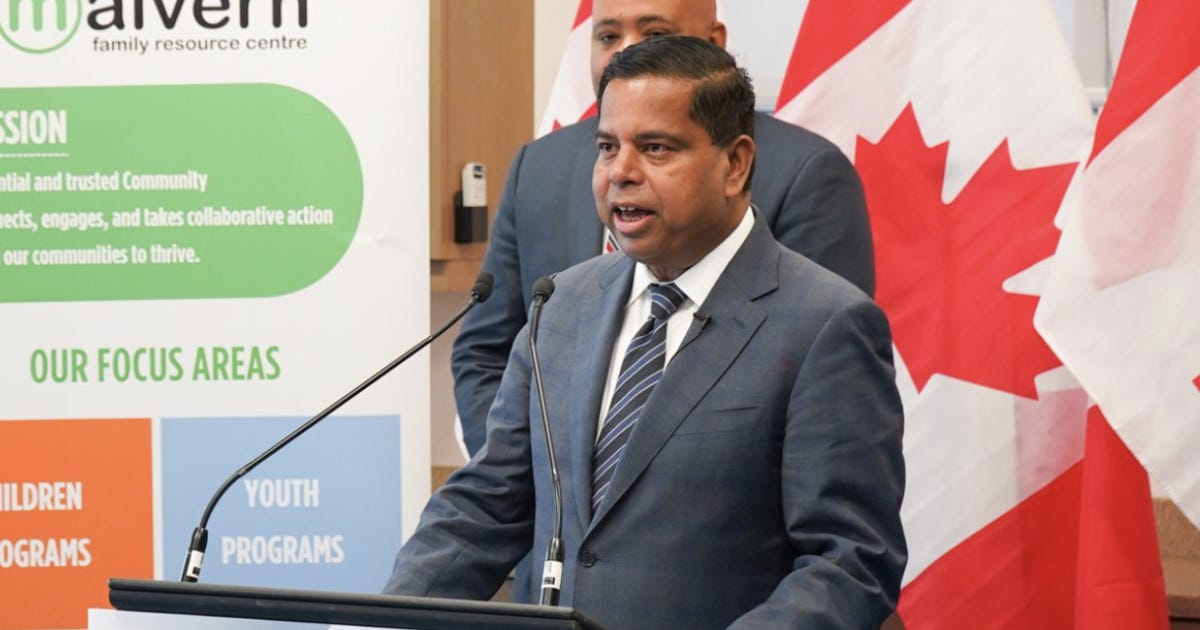
Public Safety Minister Gary Anandasangaree proved his total ignorance on firearms yet again after he posted a photo of an already-banned gun, claiming it “didn’t belong in our communities” as a push to confiscate legally-purchased firearms.
He was quickly called out by Canadian gun owners who were able to spot the difference, further cementing the accusation that Anandasangaree does not properly understand the culture he is attempting to suppress.
Anandasangaree posted a photo of an M16A2, a model that has been banned in Canada since the 1970s.
Tracy Wilson with the Canadian Coalition for Firearms Rights quickly called out Anandasangaree, saying the gun pictured was not part of the Liberals’ ban and calling the blunder “embarrassing.”


Wilson had previously tested the public safety minister’s knowledge of the program in a phone call that she later made public.
When Wilson pressed Anadasangaree about the vast majority of gun crimes in Canada being committed with illegal firearms, he did not dispute it.
“Don’t ask me to explain the logic to you on this,” he told her over the phone last September.
Anandasangaree announced the “Assault-Style Firearms Compensation Program (ASFCP)” over the weekend. He confirmed gun owners who fail to declare their firearms by March 31, 2026, will be considered in violation of the law once the amnesty period expires.
However, few provinces or territories beyond Quebec are signing up to enforce the Liberal gun-grab scheme.
Ontario Premier Doug Ford was the latest to tell the Liberal government to “stop the nonsense” when referring to the widely unpopular gun confiscation program. The Northwest Territories also signalled its outright refusal to participate.
“Let’s start focusing on getting your bail reform that you made a big deal about. You still haven’t passed it,” Ford told reporters at Queen’s Park on Wednesday. “You’re focusing on the wrong group.”
“I’ve never, ever once heard someone come up to me and say, you know those law-abiding hunters, let’s go take their guns. I’ve never heard that. What I hear a dozen times a day, no matter where I go, I feel unsafe.”

Ford added that he supports the other provinces that have pushed back against the confiscation, specifically naming Saskatchewan Premier Scott Moe and Alberta Premier Danielle Smith.
While Ford has not implemented legislation to outright block Ottawa’s collection, like Moe and Smith, he said he would not be supporting the process in any way, a position shared by Manitoba Premier Wab Kinew.
“Stop the nonsense and start focusing on real crime,” Ford said.
Meanwhile, the Toronto Police Service has also stated it will not participate in any form of firearm collection.
The same day, the Government of the Northwest Territories confirmed it would not participate in the Liberals’ confiscation program, adding that its Royal Canadian Mounted Police “will continue to focus on core policing responsibilities to support community safety.”
The territory issued a statement on Wednesday to “clarify” its role in the controversial collection scheme, saying it “has consistently communicated that it will not administer the program.”

“Our government’s primary responsibility is the safety and well-being of communities across the Northwest Territories. To support this, we are focused on ensuring the territorial resources are in place so that the RCMP can concentrate on core policing duties essential to community safety,” said NWT Minister of Justice Jay Macdonald.
“This initiative is being led by the Government of Canada, but the GNWT has emphasized to the federal government the importance of providing clear, direct communication to all Indigenous governments in the Northwest Territories regarding how the program will operate in the North.”
The nationwide program was announced after a late-2025 pilot project in Cape Breton only collected 25 guns from 16 people, despite a significant government publicity campaign.