

Author: Alex Dhaliwal
Toronto police briefly stopped a Rebel News digital billboard truck to investigate a complaint about its message Friday, as concerns mount over how Canada’s newly expanded hate speech laws could affect public expression both online and offline.
The truck, displaying a paid advertisement from the Canadian Women’s Sex-Based Rights (CAWSBAR), was pulled over by Toronto police after a complaint alleged the billboard could constitute a hate crime.
The advertisement argued that women and girls deserve “safety on the field, privacy and dignity in the locker room, and fairness on the podium,” while stating that “males are invading female sports” and directing viewers to the group’s campaign website.
After investigating, officers took no enforcement action and allowed the truck to continue operating.

The incident came just days after Bill C-9, the Combatting Hate Act, came into force on Jul. 18, prompting renewed debate over the scope of Canada’s expanded hate propaganda laws.
The Justice Centre for Constitutional Freedoms (JCCF) said it has received confidential reports from Canadians claiming government officials had contacted them at their homes regarding social media posts made months or even years earlier.


“We are receiving reports that some Canadians are being contacted at their homes by government officials about social media posts made months or even years ago,” the organization said in a Jul. 21 social media post.
The freedom-oriented charity argued the reports surfaced shortly after Bill C-9 expanded Canada’s hate speech regime by creating new offences, increasing penalties and removing some legal safeguards that previously limited prosecutions.


Juno News asked the Department of Justice whether Bill C-9 applies retroactively to historical social media posts, what legal authority exists to investigate older online content, how hate propaganda complaints are typically handled, and what legal threshold must be met before someone could face arrest or detention.
The department said Bill C-9 does not apply retroactively. It entered into effect on Jul. 18.
“Federal government officials do not contact Canadians about their social media posts,” Justice Canada spokesperson Ian McLeod told Juno News.
Instead, he said criminal investigations are conducted by police, not the federal government.
McLeod noted that hate propaganda offences already existed in the Criminal Code before Bill C-9 took effect, including offences prohibiting advocating genocide, publicly inciting hatred likely to cause a breach of the peace, wilfully promoting hatred against an identifiable group and wilfully promoting antisemitism by denying or downplaying the Holocaust.

He added that, except for public incitement likely to cause a breach of the peace, prosecutors generally require the consent of the appropriate attorney general before laying hate propaganda charges.
According to Justice Canada, investigations into alleged hate propaganda offences follow the same criminal investigative processes used for other Criminal Code offences.
The department also stressed that the offences of wilfully promoting hatred and Holocaust denial require proof of intent and do not criminalize religious expression protected by the Charter.
“It does not limit anyone’s ability to express religious beliefs in good faith,” McLeod said, adding that religious sermons, scriptural readings and teachings communicated in good faith would not meet the criminal threshold.

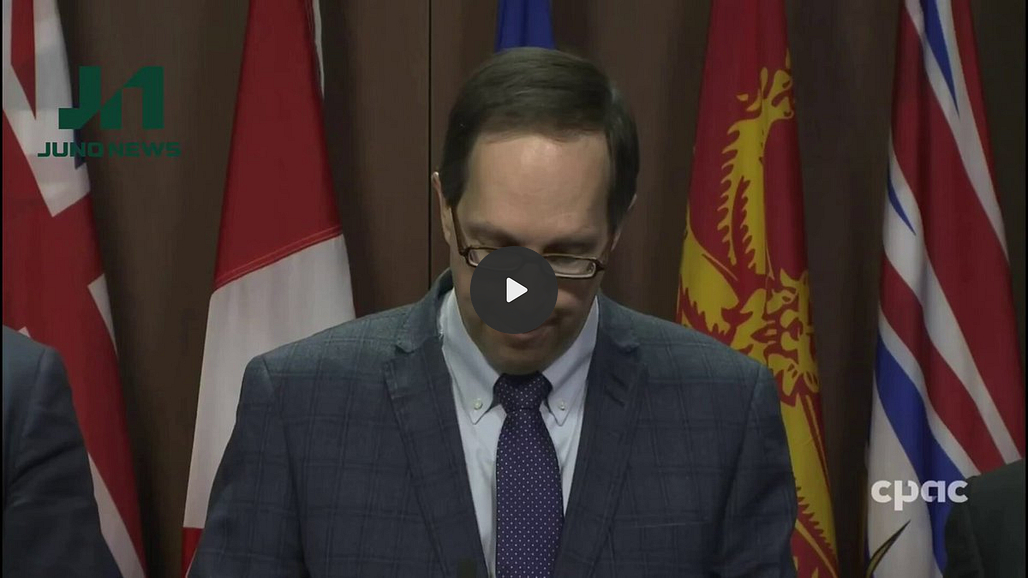
Responding to questions from Juno News, the Justice Centre said it could not publicly discuss the confidential reports it has received but maintained that lawyers are reviewing submissions from Canadians concerned about Charter rights.
“As the practical impact of Bill C-9 becomes clearer, we expect to have more to say on this issue in due course,” the organization said.
The group pointed to the Rebel News billboard incident as an example of the kinds of free expression concerns many Canadians are now raising, while acknowledging Toronto police ultimately declined to take enforcement action.
The stop has become part of a broader debate over how aggressively authorities may investigate complaints involving controversial political speech following the enactment of Bill C-9.
While Justice Canada says the legislation cannot be applied to expressions made before Jul. 18, critics remain concerned that older online posts could still attract police scrutiny under pre-existing Criminal Code hate propaganda provisions if investigators believe they violate the law.
Supporters of the legislation, meanwhile, argue the changes strengthen protections against serious hate propaganda while preserving Charter-protected expression and requiring prosecutors to meet established criminal thresholds before charges proceed.
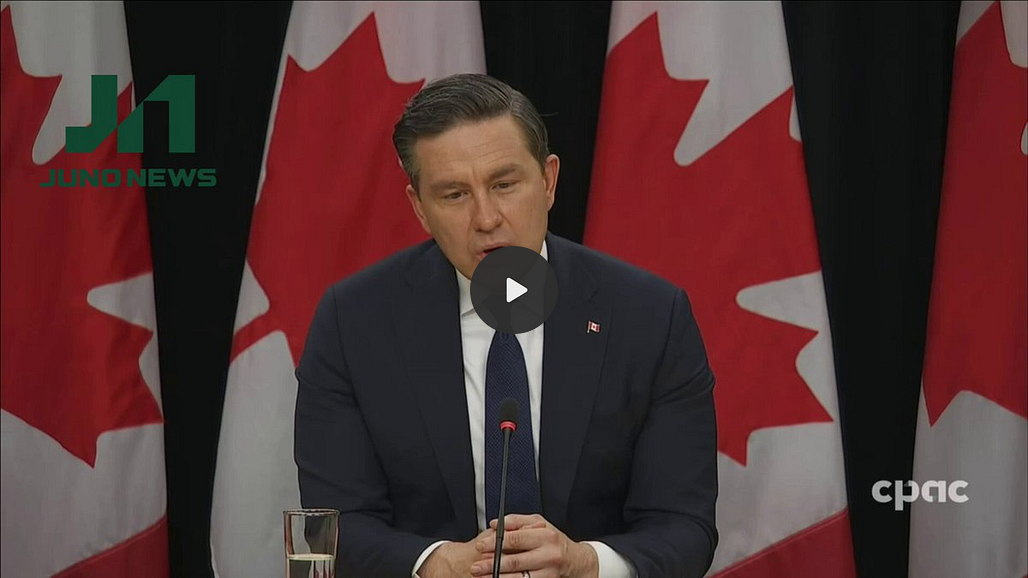
The debate has also drawn in Conservative Leader Pierre Poilievre.
In his final press conference before Parliament’s summer recess, Poilievre accused the Liberal government of building what he called a “censorship and surveillance apparatus,” arguing measures such as the Online Streaming Act (Bill C-11), proposed online harms legislation and other Liberal initiatives point toward greater government control over Canadians’ online speech.
“I think if you put all those things together, you get a troubling view about the government’s desire to control—to have more control and for the people to have less independence,” Poilievre said.
He added that Conservatives support stronger tools for law enforcement to protect Canadians but argued those powers should not come at the expense of civil liberties.
“We all believe in tougher laws and better tools for law enforcement... and we believe that we can do that while protecting our liberty at the same time.”
Seems to me that an awful lot of hate is spewed from the cult of Islam but they get a pass. Kind of like only whites can be accused of racism. I need crampons for all these slippery slopes we have these days. We are letting our country fall by playing into their hands. They have us over a barrel with their gun laws, now comes the paddle and we deserve it. Best to quit thinking that we have the old Canada, It isn't and we don't So what are you going to do as the control grid expands? Hello, anyone there? Are you beginning to realize the problem?
The Canadian government has been salivating for a long time at the prospect of wielding power over their political and ideological foes in a manner similar to what Britain is experiencing. They've been enacting laws to that end, such as compelled speech, and for example the Elections Act, 91 (1) which states “No person or entity shall, with the intention of affecting the results of an election, make or publish, during the election period, (a) a false statement that a candidate, a prospective candidate, the leader of a political party or a public figure associated with a political party has committed an offence under an Act of Parliament or a regulation made under such an Act—or under an Act of the legislature of a province or a regulation made under such an Act—or has been charged with or is under investigation for such an offence; or (b) a false statement about the citizenship, place of birth, education, professional qualifications or membership in a group or association of a candidate, a prospective candidate, the leader of a political party or a public figure associated with a political party.”
Even the CBC at the time printed this. ““Egypt and the Gulf states have aggressively prosecuted social media users over critical comments, using laws ostensibly intended to prevent disinformation.”
“international experience shows that such laws have become a weapon for governments looking to silence online dissent.”
"It's just deeply concerning that just in doing my job, repeating facts that I heard in the news, that I could be breaking the law."
The penalties for violation were up to five years in prison and, or, a $50,000 fine. The Canadian Constitution Foundation successfully challenged it having it struck down in court on February 19, 2021. However, the black face groper denier and his successor weren't dissuaded.
Anyone who believes that we'll get our country back can't see beyond the next Conservative government. The framework for our destruction is being built into domestic and international law. Like cancer in remission, rescinding it will simply halt the disease for a time. Is offering drugs to those addicted, releasing a murderer because he was a victim of climate change or excused because his skin hue identifies him as someone who might have experienced systematic racism, implementing laws to criminalize free speech, and intentionally confusing children about what sex they are, among many others, the Canada the 54+ age group supports? More likely, they're reminiscing about what was, and not is. It's easier to get those warm feelings when one's home is paid off and perhaps benefiting from property rentals that are providing nice dividends while those struggling with the liberal caused housing crisis suffer.
The cultural and political theocracy that has emerged from the vacuum left by the demise of fundamental values of society which are believed to have originated through organized religion, and been corrupted in some fashion, have discredited themselves, and been replaced by a cult. (Their failures don't diminish the tenants or lessons of, for example, The New Testament Bible. Being "religious" isn't a prerequisite for perceiving its value.) The indoctrinated sheep, and elites who are using it for their own ends, are setting the stage for a technological theocracy that will wield absolute power over all individuals after every country willingly (and by economic coercion) relinquishes their sovereignty to a centralized entity.