

Author: Clayton DeMaine
After hearing concerns from an immigration lawyer about a lack of clarity in the Liberal’s Bill C-3 on who qualifies for citizenship and what documents are valid to prove citizenship for applicants, a spokesperson for the IRCC told Juno News “distant Canadian ancestry alone does not make someone automatically eligible.”
In a news release shared by the immigration department, a spokesperson clarified that the immigration department is reviewing a total of 6,500 applications for citizenship by decent received through Bill C-3 after 100 citizenship certificates were recalled due to “potentially insufficient supporting documentation.”

“This immediately initiated a subsequent review to confirm whether, in the identified cases, the documentation provided was sufficient to establish entitlement to Canadian citizenship by descent. In some cases, this included documentation from open sources,” the news release reads. “As this subsequent review took place, citizenship certificates for those identified cases were temporarily suspended while eligibility for citizenship by descent was verified.”
After reviewing the 6,500 cases, 100 identified cases of potentially insufficient documentation was found. Since then the IRCC “automatically reinstated 33 citizenship certificates after confirming “that the applicant met the legal requirement for citizenship,” according to the department.
“IRCC is now undertaking next steps with the 67 cases still outstanding. It is worth noting that these outstanding cases represent roughly one per cent of total certificates issued under C-3 to date,” the release states. “IRCC is working diligently to contact these clients directly. IRCC will either confirm their eligibility for a citizenship certificate under C-3, or where needed, ask for additional information to validate their eligibility for citizenship by descent.”
The department stated that the review of the 67 cases is expected to “be complete within a matter of days.”
The immigration department admitted that unclear rules and guidance from the outset “may have contributed to certificates being issued without sufficient evidence.”
“That is why IRCC has reinforced guidance to our officers and provided clearer information for applicants about what documentation is required from them in this process,” the news release states. “We recognize the serious impact on those affected by this situation, and the uncertainty that some applicants have faced.”
As reported by Juno News last week, the now admitted lack of clarity with Bill C-3 lead to several social media groups with thousands of members claiming interest in becoming Canadian based on distant ancestry to Canadian land, before Canada was even a nation.
Some individuals, who largely wanted to immigrate espousing left-leaning ideology, claimed to have been approved for citizenship based on ties to Cajuns who left what is now Nova Scotia following the British defeat of the French Owned Acadia in 1730.
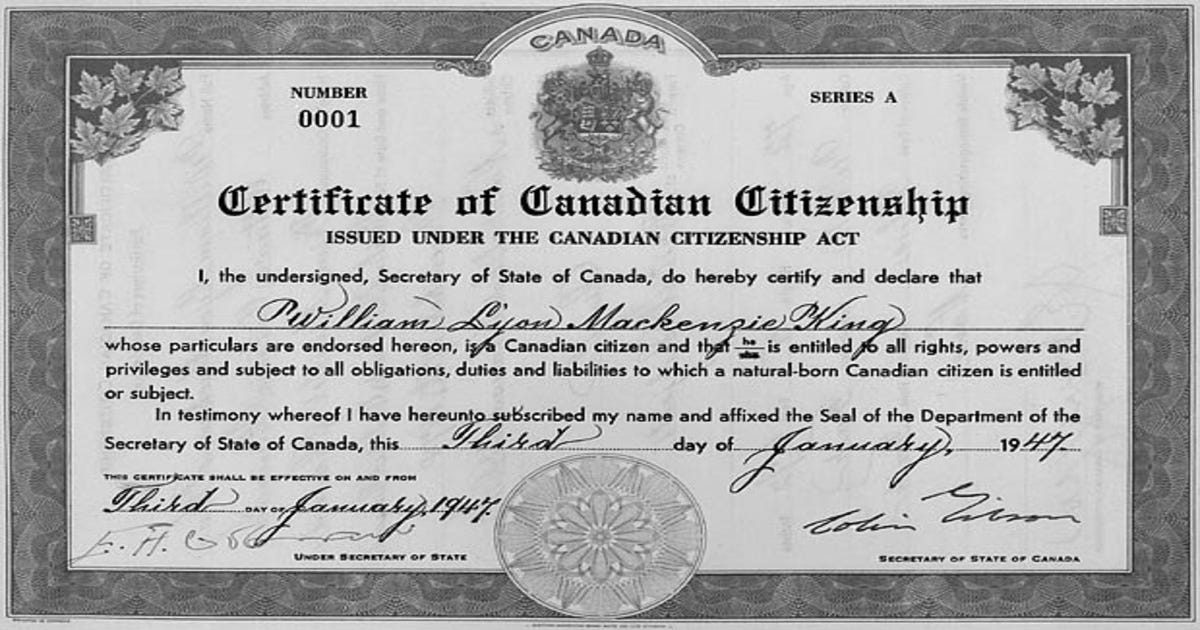
Before January 1, 1947, there was no legal status called ‘Canadian citizen.’ People born in Canada and naturalized in Canada were generally British subjects, not Canadian citizens. If the applicants’ descendants were not British subjects alive in Canada at the time that the Citizenship Act came into force, then the applicants’ ancestors would not have been Canadian citizens.
Based on this, Juno News asked the immigration department whether it was granting individuals citizenship to people whose ancestors were not alive in Canada during the implementation of the Citizenship Act.
In response, a spokesperson for the IRCC, Briannah Dale claimed that the department’s rules do not grant citizenship automatically to people whose ancestors were not or would not otherwise be a Canadian citizen.
“While these recent changes extended access to Canadian citizenship by descent, having distant Canadian ancestry alone does not make someone automatically eligible,” she told Juno News. “To have their Canadian citizenship officially recognized, a person must apply for proof of citizenship (a citizenship certificate) and meet the eligibility requirements.”
She clarified that if people were born outside Canada before December 15, 2025 must show proof that they had a parental ancestor such as a parent, grandparent or “great-grandparent” who became or who would have become a Canadian citizen “on or after January 1, 1947.” In the case of an ancestor in Newfoundland and Labrador that date is instead April 1, 1949, when the province joined confederation.
“Applicants may need to trace their family line back several generations to establish that each parental ancestor through whom the claim is made became, or would have become, a Canadian citizen under Canadian citizenship legislation,” Dale said. “People born outside Canada seeking proof of citizenship by descent (a citizenship certificate) based upon a Canadian parental ancestor under Bill C-3 must provide authentic, reliable and verifiable evidence that shows citizenship or British Subject status (prior to the creation of Canadian citizenship) in each generation.”
Dale asserted that each proof of citizenship application is reviewed on a case-by-case basis to determine eligibility before a citizenship certificate can be issued.