


Author: Melanie Bennet
A federally funded group that received $5.5 million in taxpayer money is now dismissing the well-documented spread of radical gender ideology in schools as a mere “conspiracy theory.”
A report from the Media Ecosystem Observatory claims the idea of “gender indoctrination” is nothing more than a conspiracy theory. This belief suggests that schools are promoting radical gender ideology without parental consent through policies such as Sexual Orientation and Gender Identity (SOGI) programming, drag events and transgender medical pathways for minors.
According to the report, 21 per cent of Canadians surveyed said they believe schools are indoctrinating children with radical gender ideology, representing the highest level of agreement among the eight claims tested.
The Media Ecosystem Observatory’s report is based on the assumption that gender ideology is an unquestionable fact.
From that perspective, anyone who doesn’t believe in gender ideology must have fallen prey to misinformation. But for many parents, embedding philosophical and political beliefs about gender in the K-12 education system without a meaningful opt-out is unacceptable. When parents question the pervasiveness of gender ideology, they are often accused of hate.
The MEO is a collaboration between McGill University and the University of Toronto, among others, and receives funding in part from Canadian Heritage’s Digital Citizen Initiative. In 2023, then-minister Dominic LeBlanc announced $5.5 million over three years to the Canadian Digital Media Research Network, with the MEO serving as the coordinating body.

The MEO says its goal is to address “misinformation, foreign interference, rising polarization, and growing institutional distrust.” Surely, labelling reasonable objections to gender ideology as a conspiracy will only reinforce the distrust they claim to be fighting.
To the Observatory, “institutional distrust amplified by influencers” is the reason parents and citizens have turned their backs on gender narratives. But is that true? A lot of what finds its way on social media are posts exposing what the legacy media refuses to cover.
In Ontario, one school board provided its teachers with a handy rebuttal guide for when parents complain about gender ideology, complete with scripts justifying their full-scale gender assault as a “human right.”
When parents notice and complain about gender ideology, teachers are instructed to tell parents that opting out of cross-curricular “inclusive curriculum” simply isn’t an option. Students “from kindergarten to Grade 12” will be taught that gender can be misassigned at birth, fluid, or nonexistent “across [all] subjects and grade levels throughout the school year” whether they like it or not.


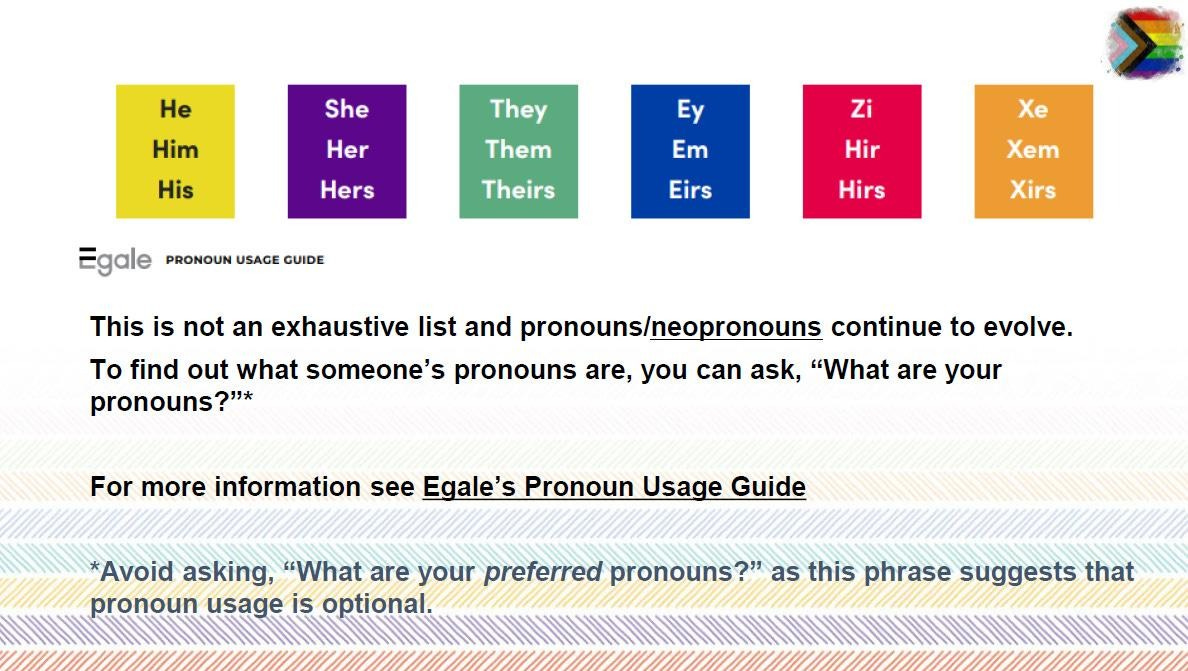
In Simcoe County, teacher training materials encourage educators to “affirm” pronouns such as Ey/Em/Eirs or Xe/Xem/Xirs. Never use the term “preferred pronouns,” though. That might imply you don’t believe in them.
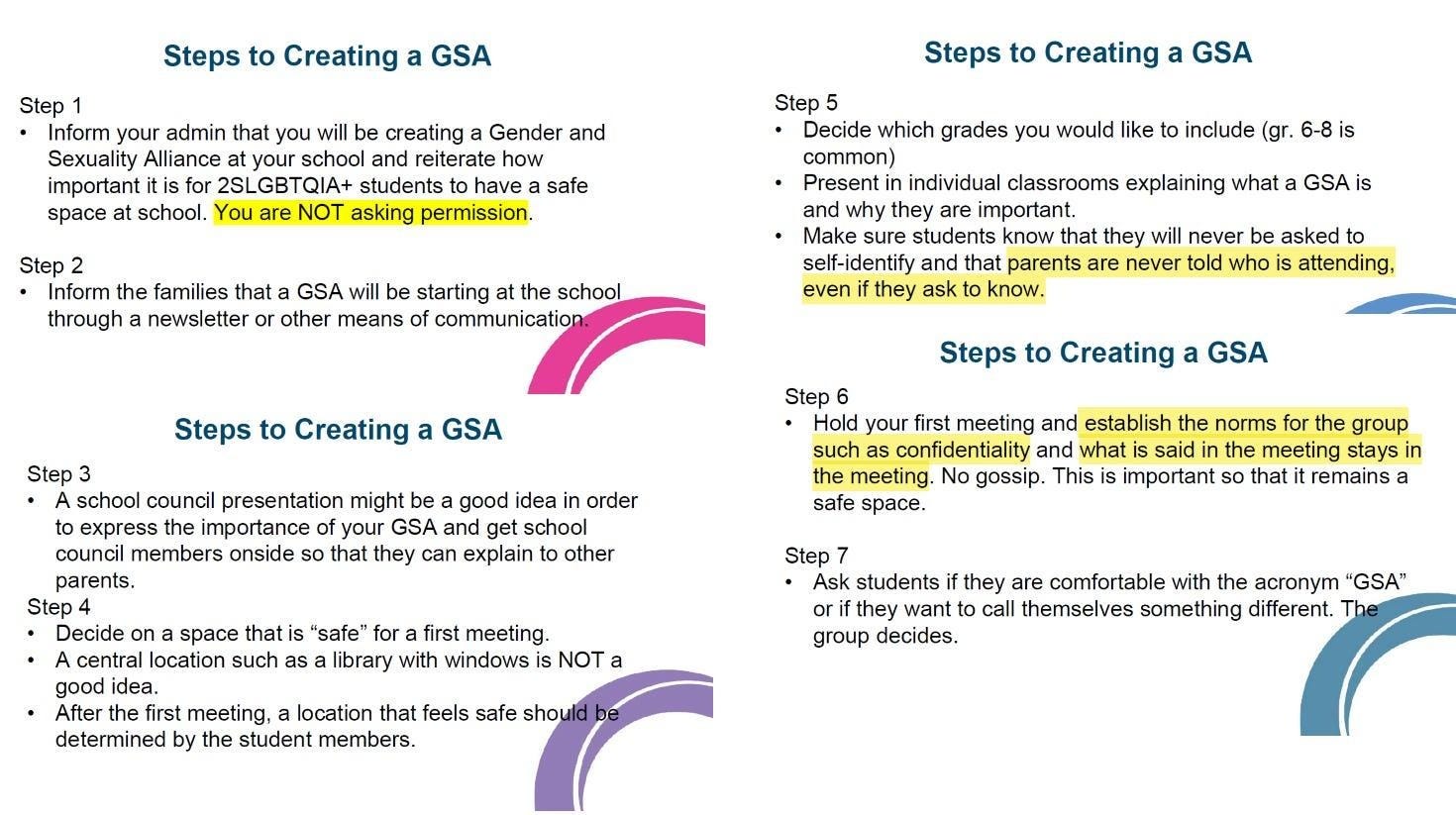
In the same training, the teachers are told that “what is said in the [GSA] meeting, stays in the meeting” and set “confidentiality” norms that are designed to limit transparency and accountability.
Past actions indicate that teachers’ unions are fully on board with radical gender ideology. In their 2024-25 policy booklet, the Elementary Teachers’ Federation of Ontario directs that school boards and teachers ought to “challenge gender stereotypes and integrate trans-positive content into the teaching of all subject areas.”
In British Columbia, the B.C. Teachers’ Federation has gone even further. Last fall, they published an article urging educators to “queer” outdoor education by dismantling “static, binary, colonial, and imposed categories” such as male/female and cis/trans. The article promoted “drag pedagogy” as a classroom methodology designed to “disrupt binary thinking” and “destroy the cis-tem.”

Parents often discover the ideological nature of such teaching by accident. In British Columbia, Rick Hansen Secondary School emailed a father to inform him that his child was failing a careers course. When he investigated, he found that his son refused to complete a graded diversity, equity, and inclusion quiz that claimed that “everyone has a gender expression” and instructed on how to respond if they “get someone’s pronouns wrong.”
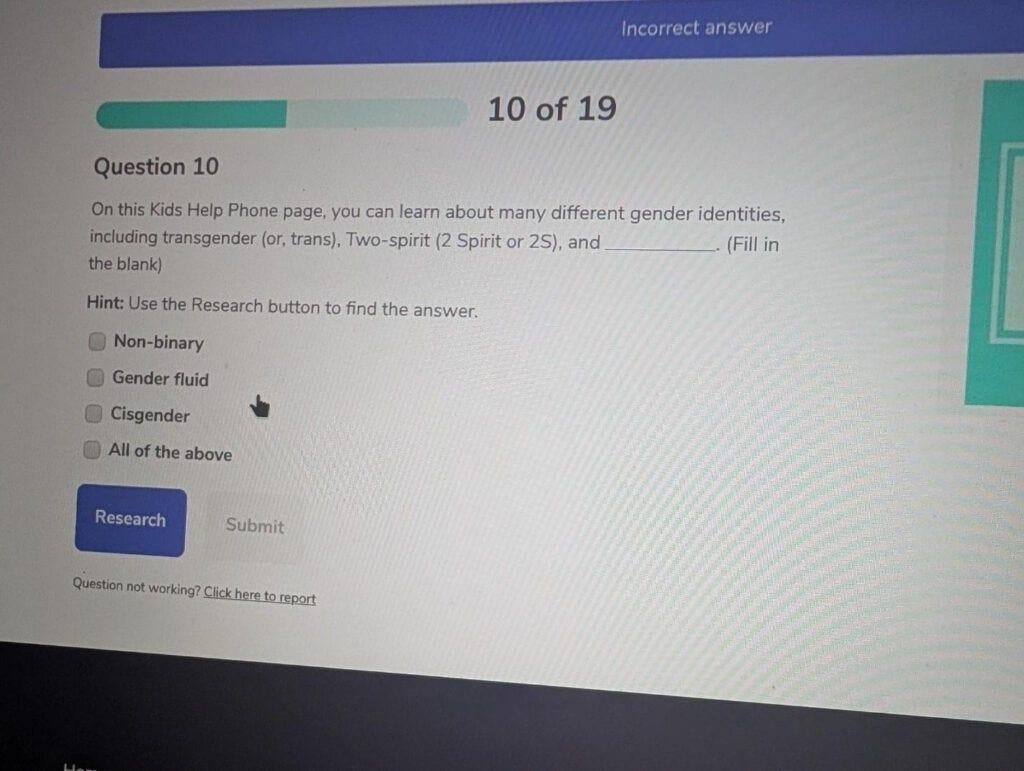
“The email said it was mandatory for graduation,” the father said. “I expected a career assignment, not social activism.”