

Author: Melanie Bennet
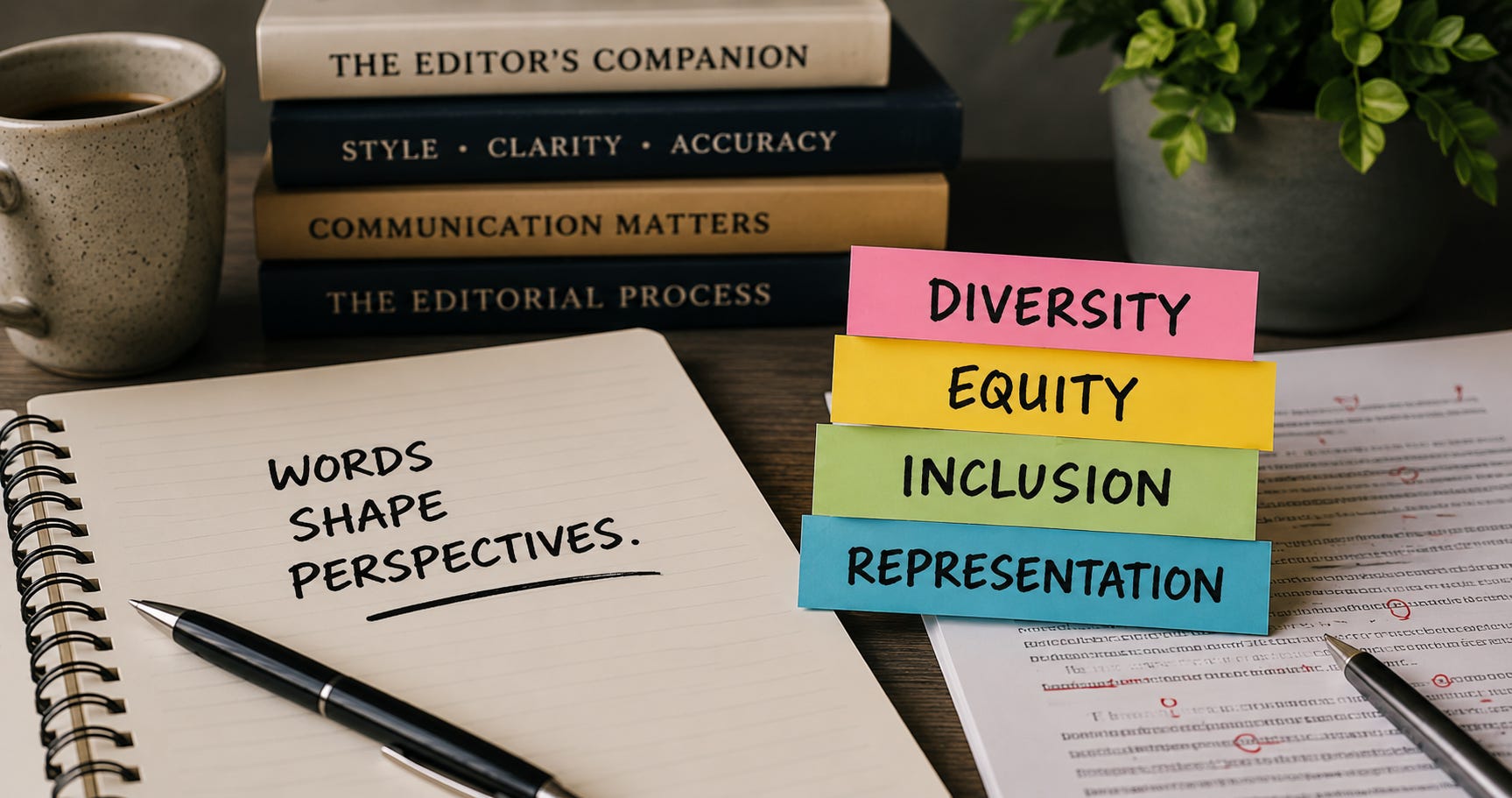
Most readers never see the editor behind a news article, they only read the finished product. A newly released handbook from Editors Canada offers a look at how the sausage is made.
The organization’s first “Editing with Respect: Equity, Diversity and Inclusion Handbook” calls itself a “living document” that will be updated as “EDI best practices” evolve.

Instead of focusing only on grammar, punctuation, and style, the guide asks editors to apply concepts like intersectionality, lived experience, systemic oppression, and representation into their review of written material.
“Just like editors benefit by learning about grammar, formatting and accessibility,” the handbook states, “editors will be able to do better work by improving their understanding of how language can be used to improve and promote, or deny and suppress, equity, diversity and inclusion.”
It introduces intersectionality as “the idea that social identities overlap to shape the experiences of individuals in unique ways.” The concept, it says, is “integral to understanding how our social identities—including race, class, gender, sexuality and disability—determine the privileges we have and the oppression we face.”
According to the handbook, editors should think carefully about whether they are the right person for a particular piece of writing.

“Being aware of the intersections in our own lives can help us determine what material we are suited to edit,” the handbook says. “If the editing requires first-hand insight into experiences, communities or backgrounds that we do not adequately have, it should be edited by someone better suited to the project’s needs and goals.”
The guide promotes the use of “authenticity readers,” sometimes called sensitivity readers.
Editors Canada describes them as specialists who evaluate “the depiction of specific identities, groups or experiences” and help identify “offensive content, bias, misrepresentation, stereotypes and lack of understanding.”
“Authenticity readers,” they say, should be brought in when authors write about “communities they do not belong to or experiences they have not had.”

Accuracy and readability become secondary considerations as editors are asked to consider how language might influence different audiences. The handbook asks editors whether the chosen wording feels “harmful” or “exclusionary,” or whether a community is being portrayed in a way that “feels authentic.”
Editors Canada says the handbook is meant to help editors “edit consciously and sensitively” while promoting “a more equitable, diverse and inclusive culture” inside the profession and in “the material being edited.”
The guide is clear that editors do not have the final say. “It is an editor’s responsibility to flag issues and leave queries without censoring the material,” it states.
“Ultimately, it is up to the writer to decide whether they accept or reject the changes.”

There must be no collective benefit to all this DEI madness or they wouldn't have to use indoctrination. They should concentrate on telling the truth instead. Pray tell, what is the consequence to them when they are proven wrong? Same with politicians Just full pensions on your dime. Hit them there and let us stop this madness in real time.
If content is implied to be directed towards children but is sexually explicit in a 'deliciously inappropriate' manner, the D.I.E. advocate shall heartily endorse fostering this corruption upon them. The goal is to bypass parental consent and indoctrinate their malleable minds into the compliant automatons that generations have already been subjected to. Cooperating organizations, including the state, shall continue to build this network on behalf of the Hitler Youth program.