


Author: Alex Dhaliwal
A constitutional rights lawyer tabled research showing nearly all comments removed in Germany, which has its own hardline censorship regime, were technically legal, warning Prime Minister Mark Carney’s online safety bill could enable similar censorship in Canada.
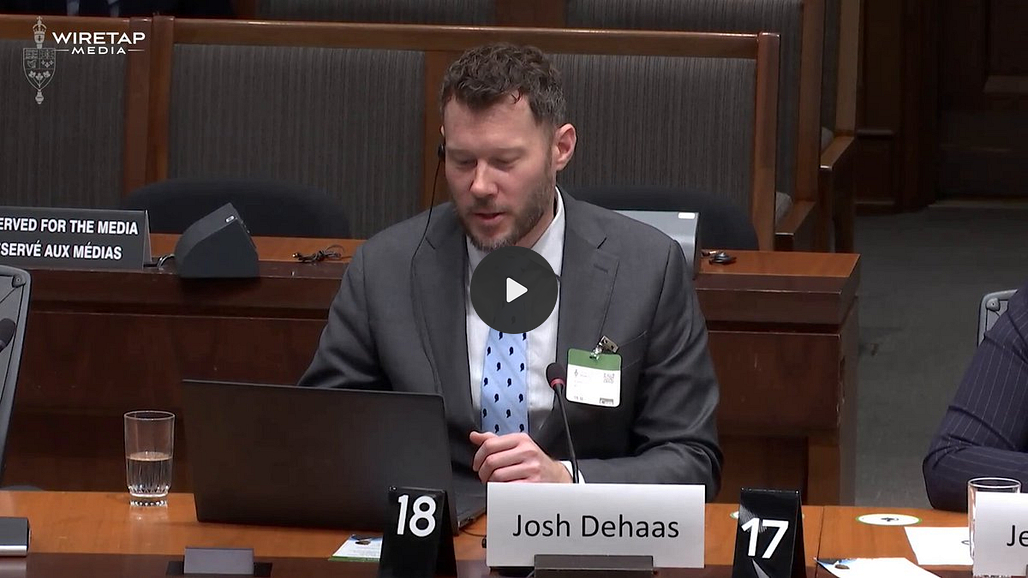
Josh Dehaas, interim litigation director at the Canadian Constitution Foundation (CCF), raised the issue Tuesday before the House of Commons Heritage Committee during its review of Bill C-34, the Safe Social Media Act.
“This is a proposal for a mild version of George Orwell’s Ministry of Truth,” Dehaas told MPs.
Bill C-34 would create a federal Digital Safety Commission with the power to regulate online platforms, enforce safety requirements and levy financial penalties.
Dehaas cautioned that the proposed regulator could be used to pressure social media and AI companies into removing lawful content to avoid government investigation.
He cited a 2024 Future of Free Speech study of comments removed from 60 politician- and news-linked Facebook pages and YouTube channels in France, Germany and Sweden, discussing Europe’s online regulation.

Researchers found that 99.7 per cent of the Facebook comments removed and 98.9 per cent of the YouTube comments removed in Germany were lawful under German law. The same was true in France and Sweden.
The findings were based on comments gathered over two weeks in June and July 2023 from a selection of political and news pages, not on a representative sample of all social media content.
“More than 11 per cent of comments in German YouTube pages were removed,” Dehaas said.
Moreover, Dehaas doubted whether restricting lawful expression had improved public safety or social cohesion in the countries under review.
“I do not know, but I suspect that the answer is no,” he said.
He cautioned that Bill C-34 could still create the same pressures in Canada even if it didn’t require removing the vast majority of categories of what the government decides is harmful speech.
“While Bill C-34 does not propose mandatory takedowns of most categories of harmful speech, it could have an equally significant chilling effect because social media and AI companies will not know in advance which speech the digital safety commissioner will criticize when they file their digital safety plans or what regulations the commissioner may create in the future,” Dehaas said.
“Where the law is unclear, social media and AI companies will err on the side of censoring more lawful expression.”
Under the proposed legislation, companies would face administrative monetary penalties of up to $10 million or 3 per cent of gross global revenue (whichever is greater) for certain breaches.
The prospect of significant fines is also part of the concern that platforms will remove legal content to avoid the regulatory hammer.

Dehaas was also critical of the bill’s reporting requirements, arguing they would lead platforms to adopt ever more aggressive moderation.
Under section 42(1)(j)-(l), regulated social media services would be required to submit Digital Safety Plans setting out the volume and type of content moderated, how quickly action was taken, and how the platforms responded to user reports.
The requirements also extend to certain moderated content outside the Bill’s defined categories of “harmful content,” where the operator reasonably considers it likely to cause significant psychological or physical harm.
Dehaas argued that such obligations would lead companies to filter out more expression than necessary to comply with regulators.
He also referred to Australia, where the eSafety Commissioner has faced legal challenges over content removal requests.
In May 2024, Australia’s Federal Court refused to extend an injunction requiring X to block footage of the Sydney church stabbing worldwide; the regulator later dropped the case.
The court did not rule the preliminary removal notice unlawful, and Dehaas has not independently shown that the regulator’s decisions are routinely overturned.
Introduced June 10, Bill C-34 passed second reading October 29 and was referred to the Canadian Heritage committee. It would restrict designated social media accounts for under-16s, with possible exceptions; require age and thus ID checks; and limit access to sexual exploitation material, non-consensual intimate images, and other harmful content.
Section 32(3) protects free expression, so platforms need not take measures that unduly restrict it when mitigating exposure to harmful content.
Critics question whether that protection would stop platforms from removing lawful speech on a voluntary basis to avoid the regulatory gauntlet.
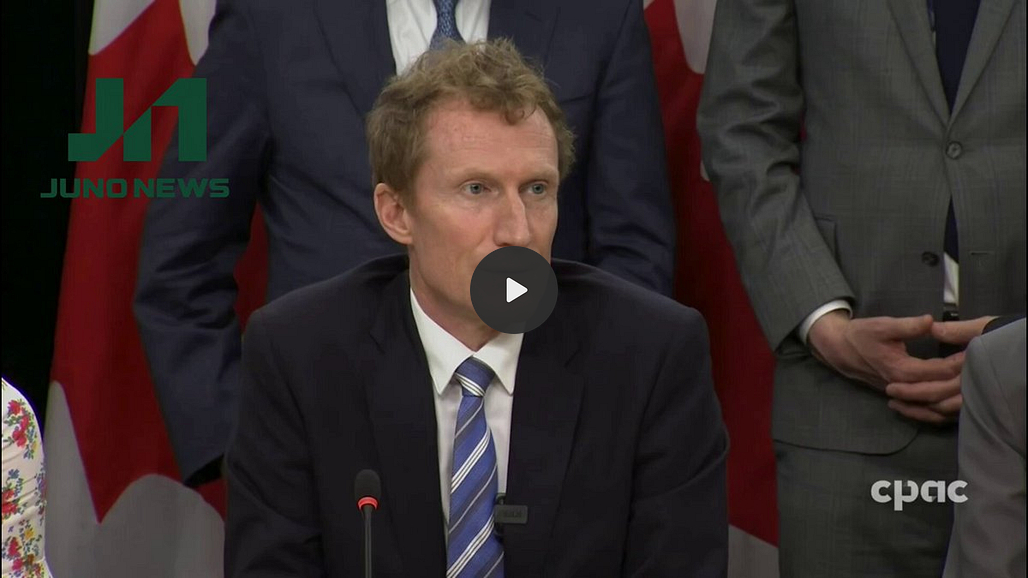
Heritage Minister Marc Miller admitted it’s difficult to distinguish acceptable from unacceptable online discussion.
“There needs to be a space online for discussion,” Miller told reporters in September.
“What constitutes legitimate and illegitimate discussion is a very fine line that has a lot of views from people, particularly around very important things like freedom of expression.”
Miller also admitted the government had considered several competing factors in drafting the bill.
“We had long policy discussions about what should be in and out of this bill,” he said. “It’s a trade-off. There are reasonable restrictions on rights in this country.”
Carney has reiterated that he believes the legislation is absolutely necessary to protect the children.
“Children are falling victim to sexual abuse, cyberbullying and extreme violence online,” Carney previously said. “The current status quo is failing our kids, and we’ll not stand by it.”
Dehaas was clear that you don’t need a new federal regulator with sweeping oversight powers over online expression to protect children.
“The CCF submits that children can be protected online without creating a new regulator that will also be empowered to censor adults,” he concluded.