


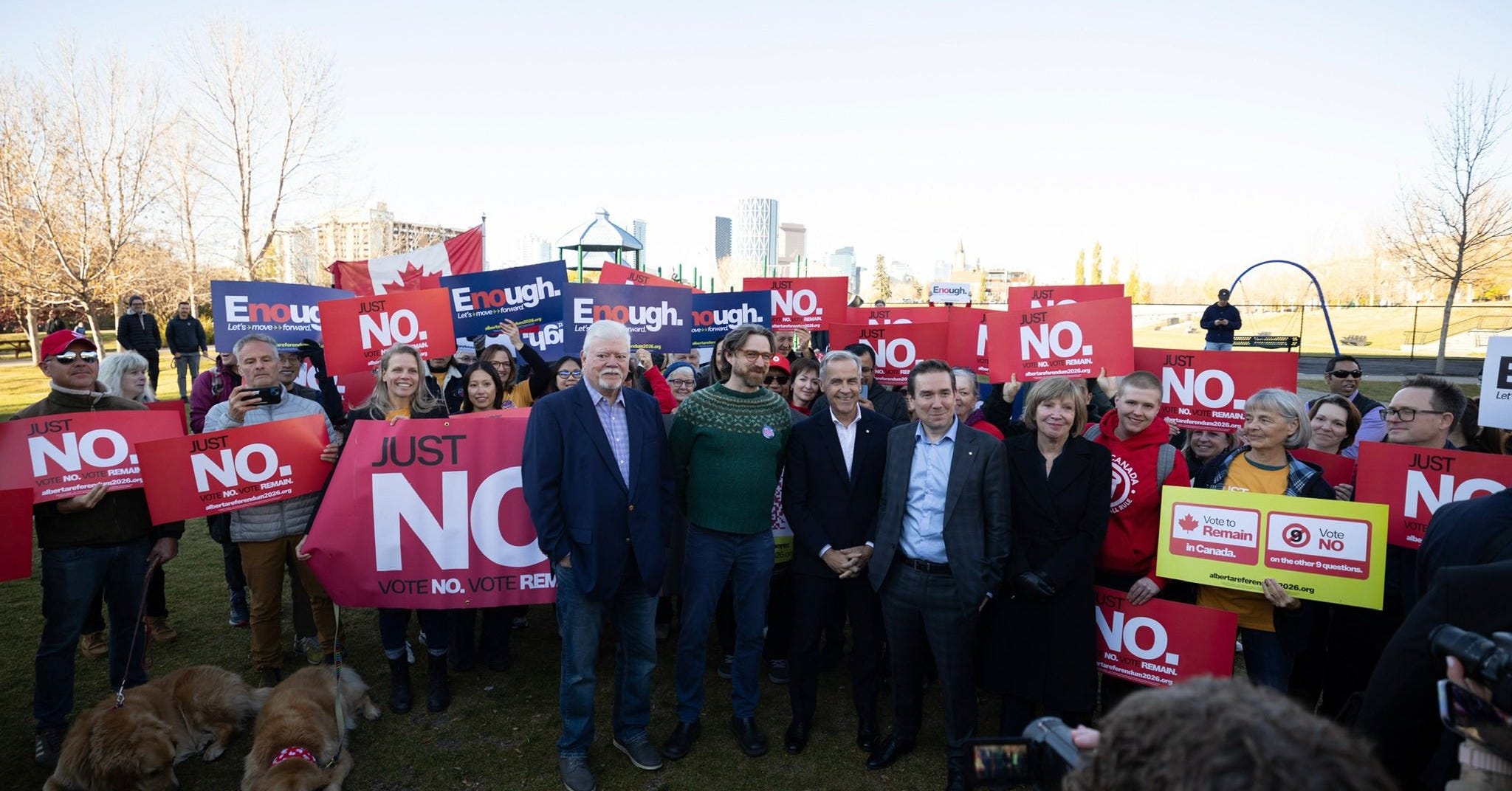
Prime Minister Mark Carney has expanded his fight against Alberta separation, backing a campaign to defeat nine of Premier Danielle Smith’s referendum proposals just days before Albertans head to the polls.
Speaking in Calgary on Thursday, Carney urged voters to reject ballot questions covering immigration, social services and constitutional reforms, marking his first public endorsement of the “No to the Nine” campaign.

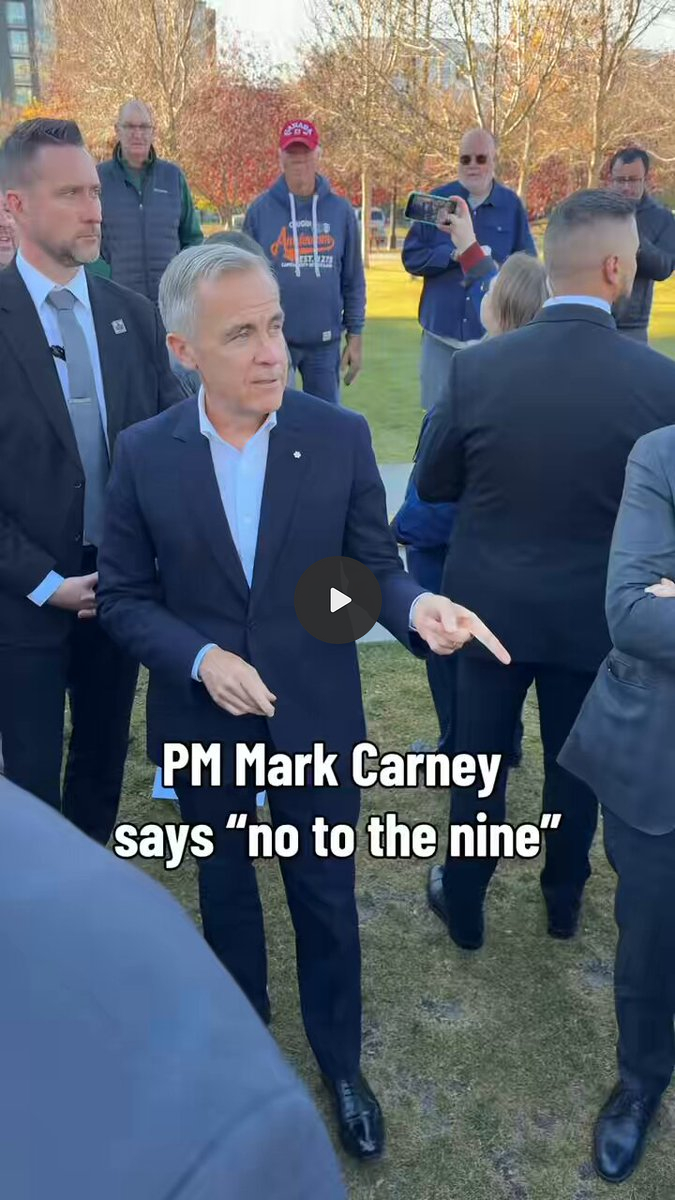
The Prime Minister visited Cinnamon Indian Cuisine & Bar in northeast Calgary, where he met supporters and encouraged them to vote in the October 19 referendum.
“It’s hard to think of a worse time to have a referendum, or a better time for the province,” Carney said.
He later repeated his message to supporters of Public Interest Alberta, another group opposing the nine questions, urging them to vote “no to the nine.”
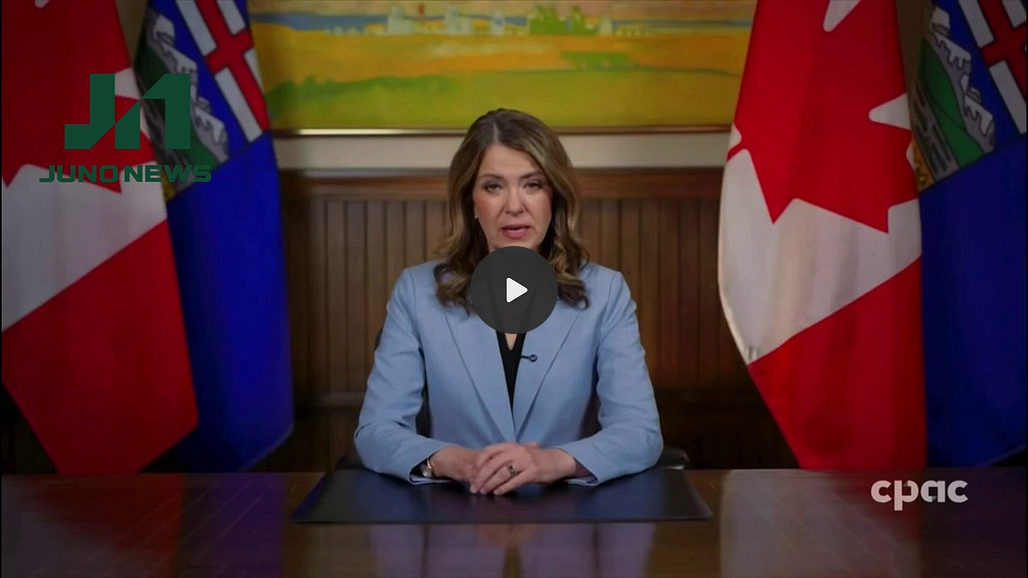
Carney’s intervention directly challenges Smith, who voted to remain in Canada during advance polling Wednesday but urged Albertans to support the other nine questions.
“Voting yes to questions one through nine is how we send a message to Ottawa that provinces need more autonomy and respect if Canada is going to be stronger and unified,” Smith said.

The nine non-binding questions cover immigration, eligibility for taxpayer-funded services, voter ID, Senate abolition and opting out of federal programs without losing funding.
Smith argues Ottawa’s immigration and fiscal policies are straining Alberta taxpayers and services. However, referendum approval would not override federal authority or constitutional requirements, including unanimous consent to abolish the Senate.

A tenth question asks whether Alberta should remain in Canada or begin the constitutional process toward a future binding referendum on independence.
Albertans are not voting to approve immediate separation on October 19.
“It’s time to have a vote, understand the will of Albertans on this subject, and move on,” Smith said when announcing the question in May.
The independence debate has also sparked a separate legal battle over a citizen-initiated petition.
In May, Alberta’s Court of King’s Bench blocked the independence petition over Indigenous treaty rights concerns. Proponent Mitch Sylvestre appealed, and the Court of Appeal later allowed signature verification while the case proceeded.
Even a future vote favouring independence would not automatically separate Alberta from Canada.
Under the Supreme Court’s 1998 Quebec Secession Reference, a clear majority on a clear question would trigger a constitutional obligation to negotiate, not an automatic right to independence.
The federal Clarity Act gives the House of Commons a role in determining whether a secession question and its resulting majority are sufficiently clear.
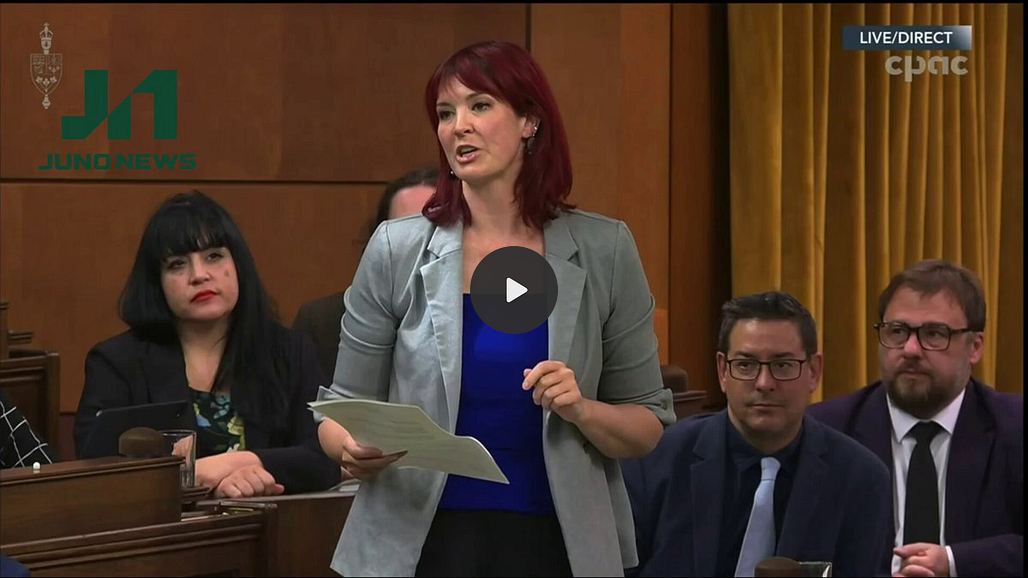
During a May 26 parliamentary exchange, Bloc Québécois MP Christine Normandin argued that a simple majority should be sufficient.
“The majority wins with 50% of the votes plus one,” she said in French.
Carney responded that Alberta’s October referendum was a “question on the question,” meaning the Clarity Act would not apply to the preliminary vote. A subsequent independence referendum, however, would face federal scrutiny.
The Act does not establish a fixed supermajority, instead requiring consideration of factors including turnout and the margin of victory.
Asked whether 50 per cent plus one automatically satisfies those requirements, Carney rejected the suggestion.
“It is absolutely not. And I would just recommend that you read the Clarity Act,” he said.
Constitutional lawyer Keith Wilson has disputed Carney’s interpretation.
“Carney is wrong about the law,” Wilson wrote on X, arguing that the Supreme Court did not require Parliament to approve a provincial referendum question beforehand.
Carney also warned that an independent Alberta could lose the benefits of Canada’s trade agreements, citing ongoing negotiations with India.
“If we were to go down a different track, then all of a sudden all those deals are gone. They only apply to the rest of Canada. They don’t apply to Alberta,” he said.
Any future trade arrangements for an independent Alberta would depend on negotiations and applicable international agreements.
The prime minister is scheduled to attend a federalist rally Thursday evening before travelling to Edmonton for Friday’s “Forever Canadian” rally. Conservative Leader Pierre Poilievre is also expected in Calgary on Friday.
If he's against it, it's good for the country