



Canada shed 68,000 jobs in September, bringing losses over the past two months to 110,000 as unemployment climbed to 6.5 per cent, according to Statistics Canada.
The latest Labour Force Survey, released Friday, showed the second consecutive month of employment declines, following 42,000 jobs lost in August.
The September figures were far worse than economists expected. Forecasters had anticipated 9,200 new jobs, missing the actual result by more than 77,000 positions.
Full-time employment fell by 35,000 positions, while part-time employment declined by 33,000.

Public sector employment dropped by 70,000 positions, its fourth consecutive monthly decline, while self-employment fell by 23,000. Private sector employment was little changed.
Young Canadians were among the hardest hit, accounting for 48,000 job losses in September. Another 50,000 young people left the labour force, leaving the youth unemployment rate relatively unchanged at 13 per cent.
Women aged 25 to 54 also lost 28,000 jobs, pushing their unemployment rate to 5.3 per cent.
Quebec recorded the largest provincial decline, shedding 49,000 jobs, followed by British Columbia with 20,000. Alberta bucked the trend, adding 23,000 positions.
Canada’s labour force participation rate fell to 64.8 per cent, its lowest level since December 1997, excluding the pandemic. Statistics Canada attributed much of the longer-term decline to population aging.
Finding employment has also become more difficult. Just 30.6 per cent of Canadians unemployed in August found work in September, compared with 32.8 per cent a year earlier.

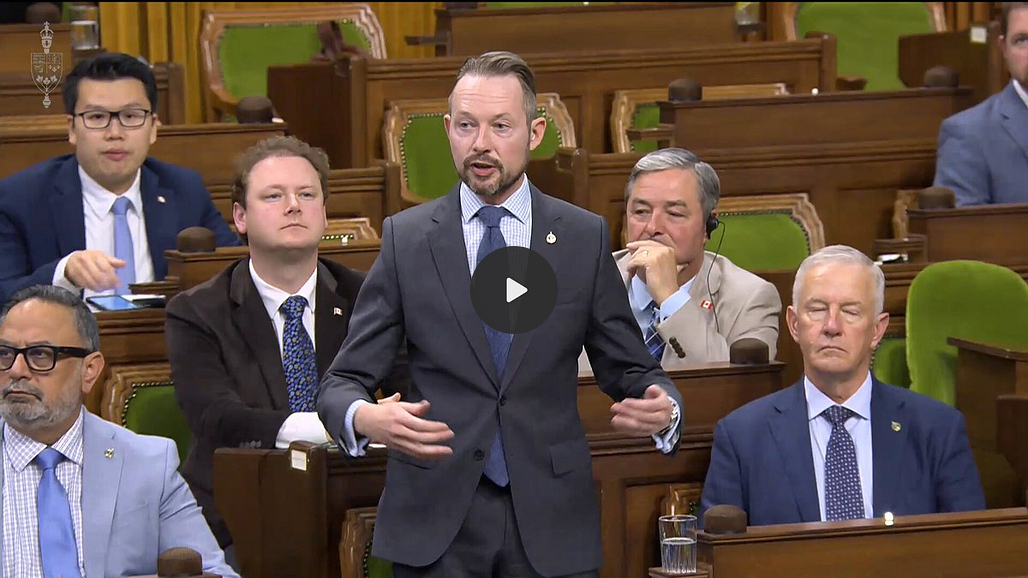
The figures sparked a confrontation in the House of Commons on Friday, with Conservative MP Michael Cooper demanding that Prime Minister Mark Carney take responsibility for the worsening labour market.
“The latest StatsCan jobs report is in, and the numbers are devastating,” Cooper said.
“Nearly 70,000 jobs [were] lost in September. That’s on top of 42,000 jobs lost in August.”
Cooper later challenged Carney over his economic promises.
“The Prime Minister promised the strongest economy in the G7. So will he acknowledge that once again his rhetoric doesn’t match reality?” he asked.
The parliamentary secretary to the minister of finance defended the government’s affordability measures, including tax reductions and the Canada Groceries and Essentials Benefit.
“We’ve cut taxes on income, housing, fuel, and new business investment,” the parliamentary secretary said.
By industry, educational services suffered the largest losses, shedding 35,000 jobs, followed by health care and social assistance with 23,000 and manufacturing with 13,000.
Manufacturing’s decline came despite a gain of 22,000 positions in August, leaving employment in the sector little changed from a year earlier. However, American tariffs on automotive, steel, aluminum and lumber products remain a concern.
Responding to Cooper, AI Minister Evan Solomon pointed to the trade war and major infrastructure projects as sources of future employment.
“We all know we are in a very challenging trade war, and that is why the thing to do is to build major projects and create jobs,” Solomon said.
He highlighted nuclear projects in Ontario and a potash mine east of Saskatoon, citing thousands of construction and energy jobs.
“We are building the jobs,” the minister added.
Meanwhile, a federal regulatory notice warned that U.S. tariffs could threaten approximately 87,000 Canadian jobs, including 52,000 directly tied to exporters and another 35,000 linked to suppliers and service industries.
The estimate, attributed to University of Calgary economist Trevor Tombe and cited in the federal notice, represents jobs potentially at risk rather than confirmed layoffs.
According to Blacklock’s Reporter, Employment Insurance claims have surged in tariff-affected communities. Regular claims in Oshawa, Ontario, increased by 400 per cent, while claims among steelworkers in Northern Ontario rose by 44 per cent.
Ottawa has extended a temporary waiver of the Employment Insurance waiting period until October 9, 2027, citing continued uncertainty surrounding American trade measures.
CIBC senior economist Andrew Grantham suggested volatility in education sector employment may partly explain September’s weak numbers, although manufacturing losses could signal that newer U.S. tariffs are beginning to affect employers.
Despite the recent downturn, employment remained 95,000 positions higher than a year earlier, an increase of just 0.5 per cent.
The disappointing jobs report adds to the economic uncertainty facing the Bank of Canada ahead of its October 28 interest rate decision, with its benchmark rate currently sitting at 2.25 per cent.
This is what Carney wants. Everyone depended on the government as socialist country..
I would think most of this can be laid right at the feet of the lib's immigration policy or lack of is probably a better view .