

Author: Alex Dhaliwal
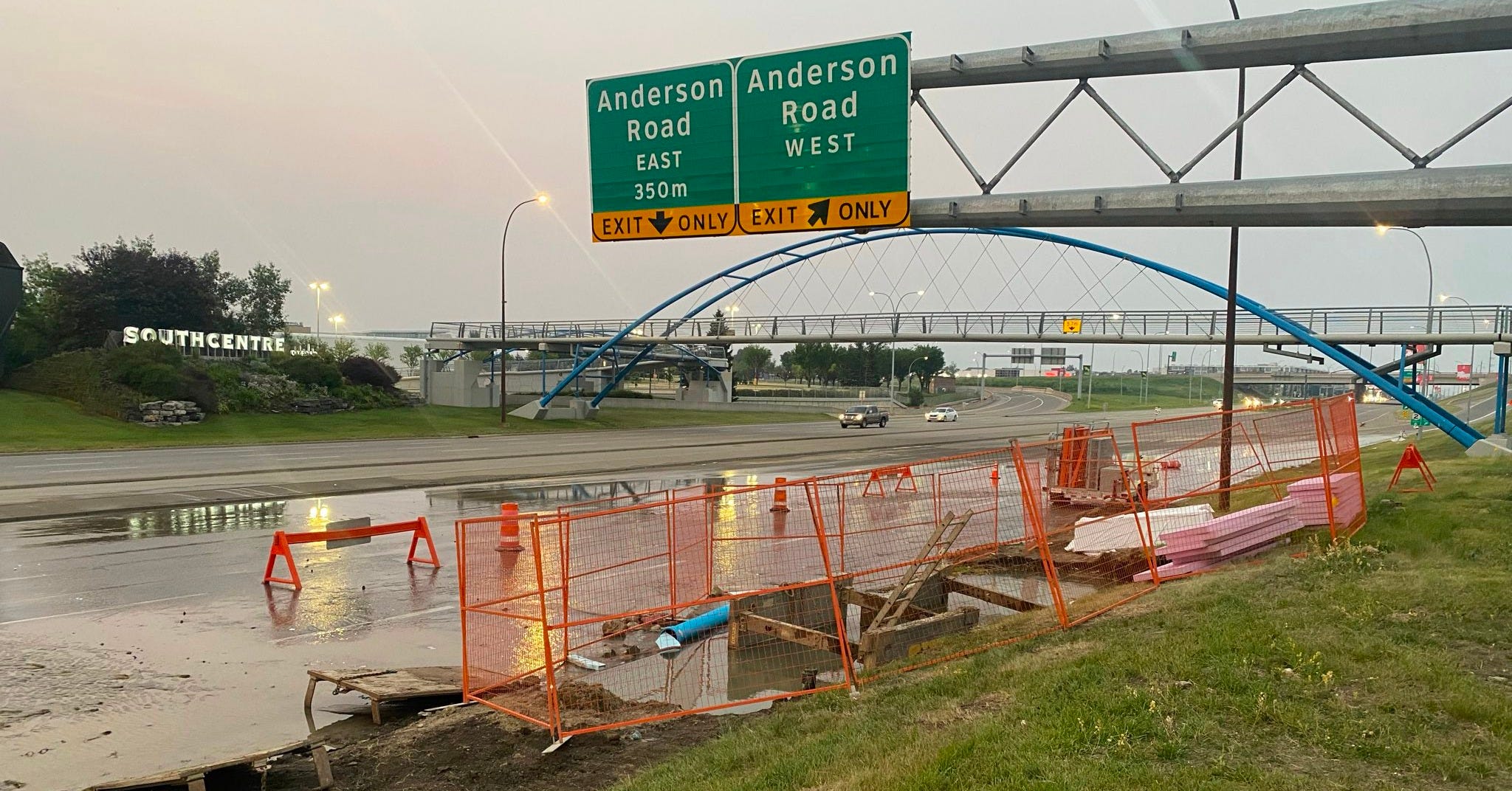
A major water main break shut down a stretch of southbound Macleod Trail during Calgary’s Thursday morning commute, causing significant traffic disruptions as crews worked to contain flooding and repair the damaged line.
The water main burst around 12:30 a.m., flooding southbound Macleod Trail and forcing traffic detours between 109 Avenue and Anderson Road.
One home and the nearby Anderson LRT station were left without water after the break, which appears to have occurred in an active construction zone, according to media reports.

The break also temporarily disrupted northbound traffic after knocking out signals at 109 Avenue.
“This break is a high priority, and we are working to determine the cause, make repairs, and restore water service as quickly as possible,” a city spokesperson said.
“Once the cause of the break has been confirmed, a plan for repairing the pipe will be determined and repairs underway.”
City crews are using acoustic equipment to pinpoint the damaged section of pipe. While most water main repairs are completed within 48 hours, officials say the timeline for reopening Macleod Trail will depend on the extent of the damage.
The latest break comes as Calgary continues replacing the Bearspaw South Feeder Main, a critical water line that ruptured twice over the past 18 months, triggering widespread flooding, traffic disruptions and water restrictions.
The city is spending $439 million to fast-track a replacement for the aging feeder main, which supplies roughly 60% of Calgary’s treated water. The project is expected to be completed by the end of 2026.
Calgary has experienced repeated major water main failures in recent years, with the Bearspaw South Feeder Main alone serving an estimated 1.5 million residents in Calgary and surrounding communities.
Reviews have linked the failures to aging infrastructure, corrosion, deferred maintenance and shortcomings in risk management.

An independent review commissioned by the city after the 2024 rupture concluded the system’s vulnerabilities developed over decades, with warning signs dating back to a 2004 water main break, including during former mayor Naheed Nenshi’s tenure.
City officials have warned additional breaks remain possible until the line is fully replaced, while the Alberta government continues its review of Calgary’s water infrastructure.
Michael Thompson, the city’s chief operating officer of water services, said the damaged main supplies the Anderson LRT station, leaving it without water.
He said crews are investigating the break and working to restore service and reopen Macleod Trail as quickly as possible.
Thompson added that Calgary experiences between 200 and 300 water main breaks annually across its more than 5,000 kilometres of water mains, with most repairs completed within 48 hours.