

The Canadian Armed Forces quietly gathered information on Canadian citizens during the Covid-19 pandemic using personal social media accounts and informal online monitoring, despite rules that explicitly prohibit that kind of intelligence collection.
The military tasked multiple units without any prior training in intelligence-gathering, to aggregate data on fellow Canadians regarding their public opinions about the CAF’s domestic response to the pandemic to influence their future decisions.
News of the military exploiting the Covid-19 pandemic to spy on Canadians was first reported back in 2020 by the Ottawa Citizen and now more details have emerged from a report obtained by CBC News on what was known as Operation Laser.
The operation involved a series of covert data-mining exercises to sway public opinion that were said to be stopped in April 2o2o by then Chief of Defence Staff Gen. Jonathan Vance, with many surreptitiously continuing on for another six months.
According to the report, numerous senior military leaders were of the opinion that the pandemic presented a unique opportunity to experiment with various propaganda techniques on the general populace, while quashing civil disobedience.
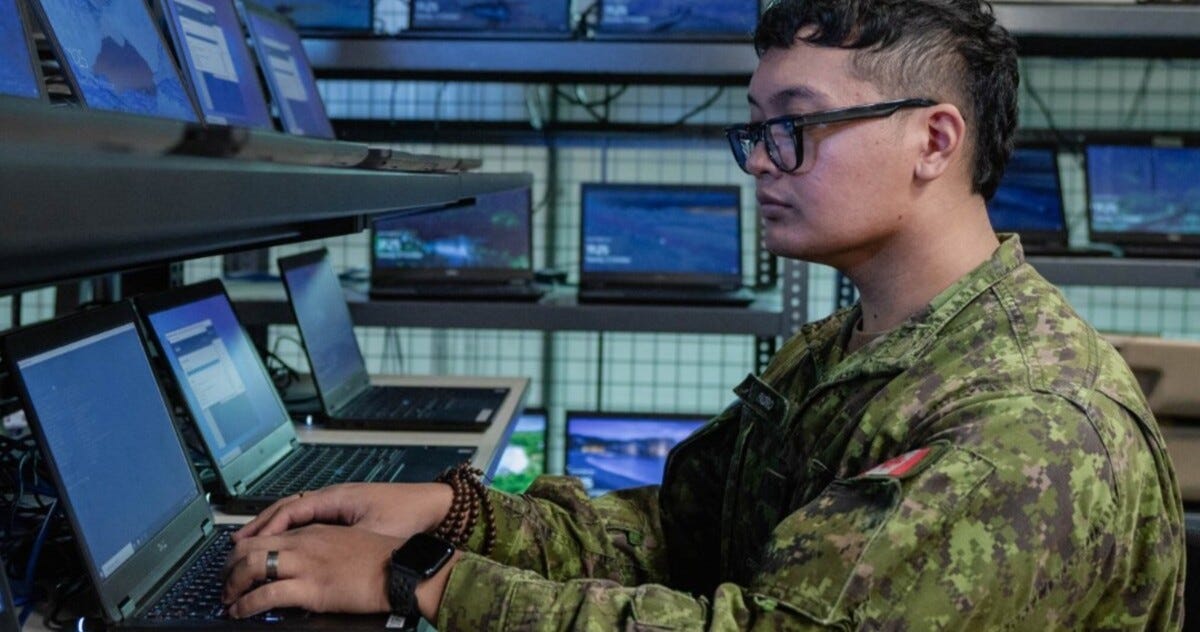
One military unit involved was called the “Precision Information Team,” with the 4th Canadian Division in the Greater Toronto Area, who used their own personal laptops from home to review Twitter, Reddit, Instagram, Facebook and other websites to measure public opinion from citizens about the CAF without any oversight on their behaviour.

Information gathered exceeded what was asked of them by Vance nor was it deleted within the time frame that was required.
“These products were intended to provide information to commanders regarding possible protests, disruptions and other activities which could impact the conduct of CAF’s Op LASER mission, or which could pose a force protection risk to nearby CAF facilities or personnel,” reads the report. “Nevertheless, in some instances, the scope of analysis exceeded that which was necessary to answer these questions and a clear nexus between the products and the requirements of the mission was difficult to discern.”
A separate military unit collected political discourse around Covid-19, including statements from private citizens shared online by creating social media accounts to “monitor key regional actors” as well as using their own personal accounts.
Additionally, not all information collected was reported and all three military units involved failed to use tools which would have concealed their identity, potentially exposing the CAF’s vulnerabilities pertaining to confidentiality.
In 2020, the National Security and Intelligence Committee of Parliamentarians urged the federal government to introduce legislation to govern the CAF’s defence intelligence activities, including what information it’s permitted to collect about Canadians.
However, none of the committee’s recommendations were ever implemented.