


Author: Melanie Bennet
Federal funding mandates are driving race- and identity-based criteria into life sciences scholarships and hiring pipelines, tying career opportunities to government program priorities.
The I.D.E.A.L. Scholarship, which offers $10,000 to selected recipients ($5,000 for CEGEP students), is open to students entering their first year of a bioscience-related program.
Applicants must also identify as “Indigenous,” “Persons with Disability,” or a “Newcomer to Canada (less than 5 years).”

BioTalent Canada states the scholarship supports “Inclusion, Diversity, Equity, Accessibility (IDEA) leadership” for students entering fields such as biotechnology, biochemistry, health sciences, and environmental biology.
Eligibility requires applicants to demonstrate “IDEA leadership,” including “creating welcoming or inclusive spaces at school,” “advocating for accessibility,” mentoring peers, or leading “community, or equity focused initiatives.”
The organization states it “values drive, resilience and demonstrated IDEA leadership alongside academic achievement.”
Applicants must submit transcripts.
However, the program does not define an academic standard.
The scholarship FAQ states that “no specific grade average is required” and that the program “focuses on your impact and leadership, not just academics.”
Applications are evaluated based on “evidence of IDEA-focused leadership and alignment with the I.D.E.A.L. Scholarship’s goals.”
Applicants must provide an acceptance letter, transcript, and proof of eligibility within one of the identified groups. Self-declaration is accepted for most equity categories.
Juno News contacted BioTalent Canada to clarify how “academic achievement” is evaluated, but did not receive a response by publication time.

BioTalent Canada describes itself as a workforce development organization supporting Canada’s bio-economy through labour market research, training programs, and employer supports.
It says it’s a “human resources partner” for sectors including biotechnology, pharmaceuticals, clean tech, and life sciences.
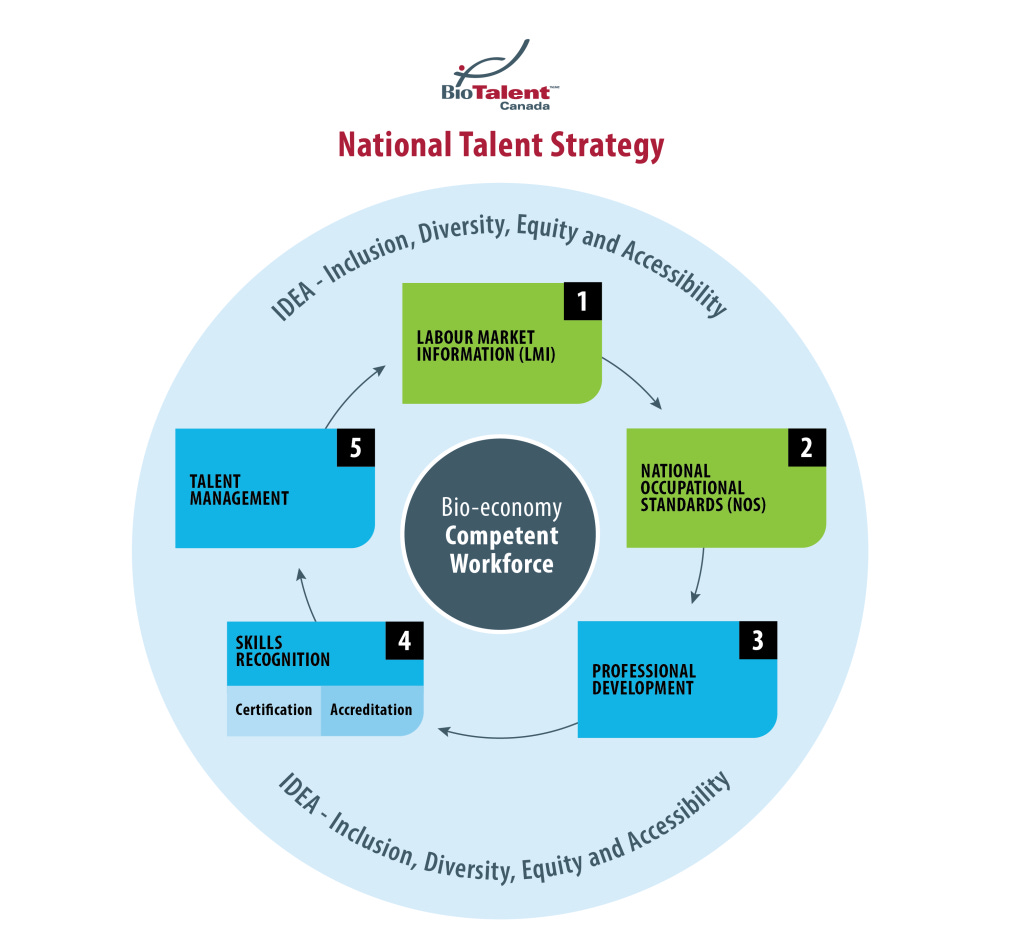
Source: BioTalent Canada
The organization delivers federally funded programs such as the Student Work Placement Program and Science Horizons Youth Internship Program, which distribute wage subsidies to employers hiring students, recent graduates, and targeted groups.
We used to fight to end discrimination and champion meritocracy. What a Frankenstein country we have now, with a vampire sucking the taxpayer life out of us at the same time………..