

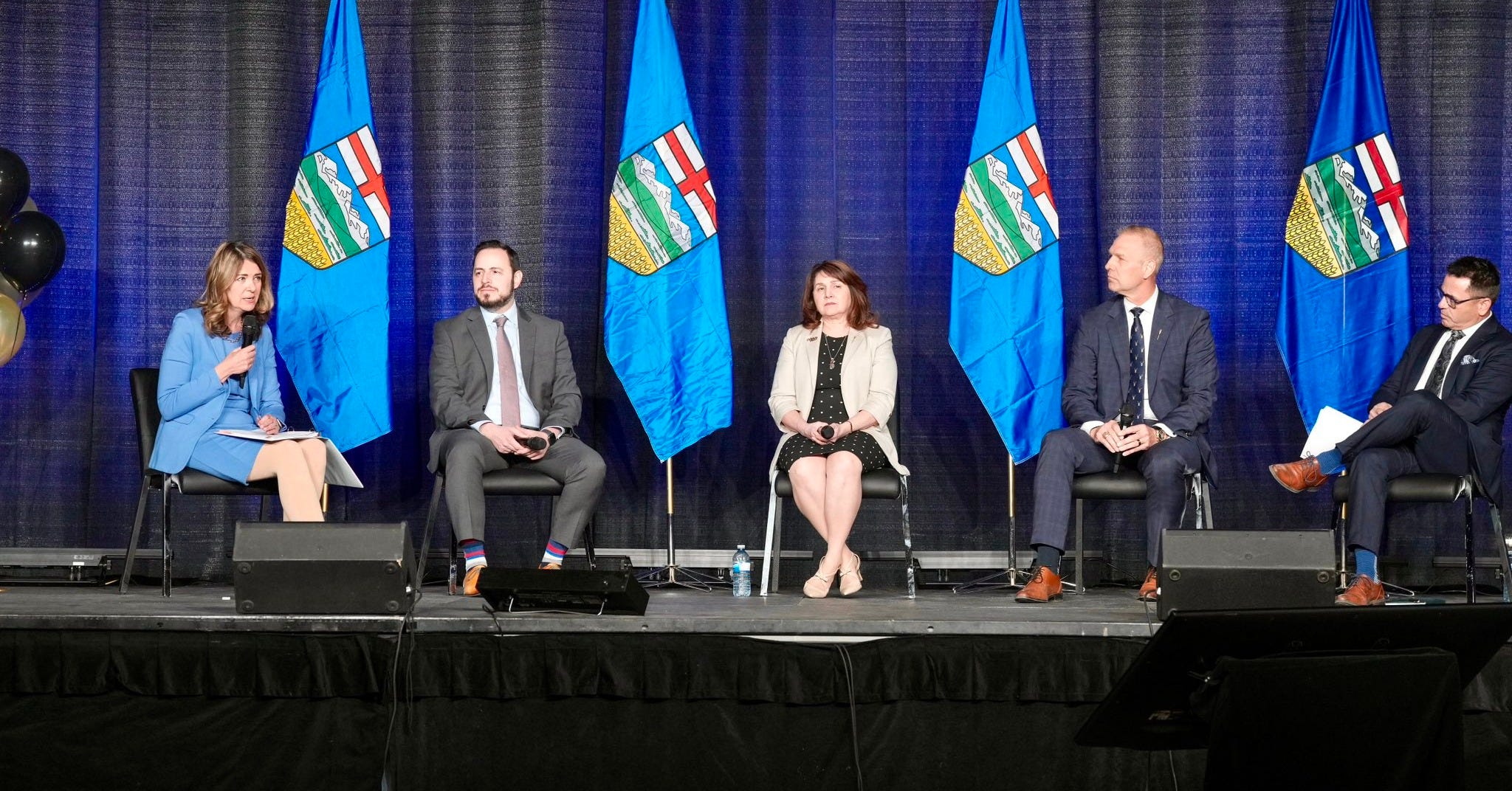
Alberta Premier Danielle Smith is pushing back against critics of her government’s new school flag restrictions, insisting classrooms should be focused on education rather than ideological messaging.
“We want people to proudly display the two flags of our country. So not only the Canadian flag, but the Alberta flag,” Smith said Sunday when questioned about criticism from the Alberta Teachers’ Association.
“What we want to avoid is having ideological flags posted in the schools or the classrooms year-round.”
The province will move to limit political and social displays beginning January 4, 2027.


Under the new rules, schools must fly the Canadian and Alberta flags outside their buildings during the school year, while other displays considered political, social or ideological will face restrictions.
“We just want to make sure that we don’t have ideological flags in classrooms making students feel uncomfortable when we’re supposed to be trying to create a neutral learning environment for kids,” Smith said.
Although Pride and transgender flags are not explicitly named in the regulation, critics argue the restrictions could limit LGBTQ-related displays in schools.
Education Minister Demetrios Nicolaides told CBC News that flags promoting political or social causes would generally not be permitted.
“If there’s a type of flag that has a political messaging or ideological statements or things of that nature, it simply wouldn’t be permitted because its primary purpose, ultimately, would be to advance a social or political cause,” Nicolaides said.
The restrictions are part of the United Conservative government’s broader effort to remove political and ideological messaging from Alberta classrooms.


Bill 25, which received royal assent in May, introduced political neutrality requirements for Alberta schools. Several provisions took effect September 1, but the flag restrictions were delayed to allow schools more time to prepare.
The rules permit certain flags, including Franco-Albertan, municipal and sports team flags, while First Nations, Métis Settlement and foreign national flags face restrictions on when and how long they may be displayed. Temporary educational displays are also allowed.
Schools seeking to display other flags must request ministry approval, with exemptions prohibited from advancing political or social causes. The rules also cover school websites and social media accounts but exempt personal belongings.
Smith cited a school in Brooks displaying flags representing students’ countries of origin as an example of an appropriate cultural display.
“We have a school in Brooks that puts up the flag for every student who comes in from another country, and it’s on display in the cafeteria, and that’s totally appropriate,” she said.
The Alberta Teachers’ Association criticized the rules as unnecessary bureaucracy amid overcrowded classrooms and growing student needs.
“It just creates a bunch of other issues that teachers don’t need to be dealing with right now,” association president Jason Schilling told CBC News.
Schilling also questioned why sports team flags face fewer restrictions than First Nations and Métis flags, arguing Indigenous communities deserve recognition “every day of the year, not just on designated occasions.”
NDP education critic Amanda Chapman similarly accused the government of prioritizing “culture war nonsense” over classroom conditions.
Smith, however, predicted educators would welcome the changes.
“We’ll see what kind of exemptions come in, monitor at that time, but I expect most teachers are going to be pretty happy with the results,” she said.