

Author: Quinn Patrick
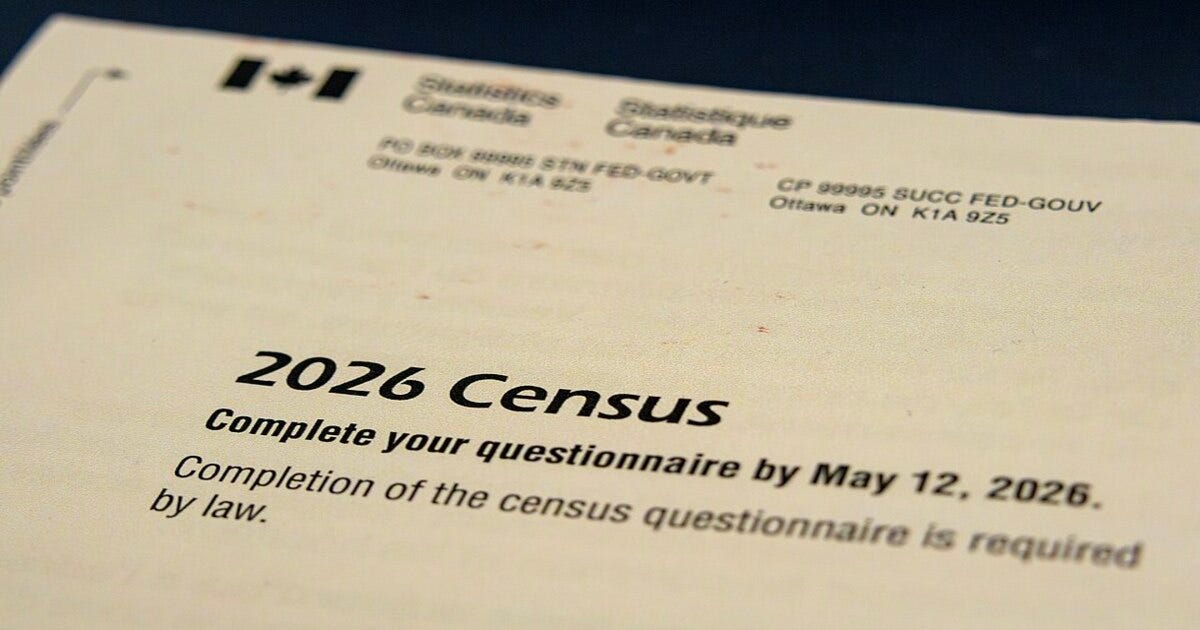
An Alberta couple says that the government allegedly violated their privacy rights after they were forced to complete a long-form census, which required them to answer questions about their sexual orientation, physical and mental disability, and history of homelessness, among other things.
Bradley and Linda Osborne of Foothills County launched a Charter challenge in June after being mandated to complete the long-form census, and were forced to divulge the information or face a potential $500 fine.
According to their statement of claim, the questions tended to “reveal intimate details of their lifestyles and personal choices.”
“Canada’s census serves an important constitutional function, including ensuring fair democratic representation,” said Constitutional lawyer Hatim Kheir, who is representing the couple.

“But a constitutional requirement to count people does not automatically authorize the state to compel disclosure of intimate details about health, personal identity, daily routines, and private life.”
While roughly 75 per cent of Canadians receive the short form census, there is a cohort of people who receive the long form version, which has been a bone of contention for decades.
The controversy is rooted in the questionnaire, which requires people to fill out a host of detailed answers on a range of topics.
In 2010, former prime minister Stephen Harper pledged not to use the long-form census the following year. Ottawa refrained from distributing the long-form census for six years until the decision was reversed under the Trudeau government.
The controversy is rooted in the questionnaire, which requires people to fill out a host of detailed answers on a range of topics.
The 2026 long-form census included questions about a person’s ethnic background, religion, language, sexual orientation and gender expression, disability and experiences of homelessness.
The Osborne’s lawsuit alleges several of those questions violate Charter rights to life, liberty and the security of the person, as well as the right to be free from unreasonable search and seizure.
Representation for their legal challenge is being funded by the Justice Centre for Constitutional Freedoms.
The court application seeks declarations that portions of the questionnaire were prescribed beyond the authority granted under the Statistics Act.
The JCCF noted that requiring Canadians to answer certain questions infringes sections 7 and 8 of the Charter, protecting liberty and privacy against unreasonable state intrusion.
“Privacy is not a minor administrative concern. The Charter recognizes that personal information goes to individual dignity and liberty. When government compels disclosure of sensitive information under threat of penalty, courts must ask whether that intrusion is actually necessary and proportionate.”
The applicants are not seeking damages or costs but rather clarification from the Federal Court on the “constitutional limits of mandatory census collection and the protection of personal privacy in an age of growing digital data retention.”